






What's Happening?
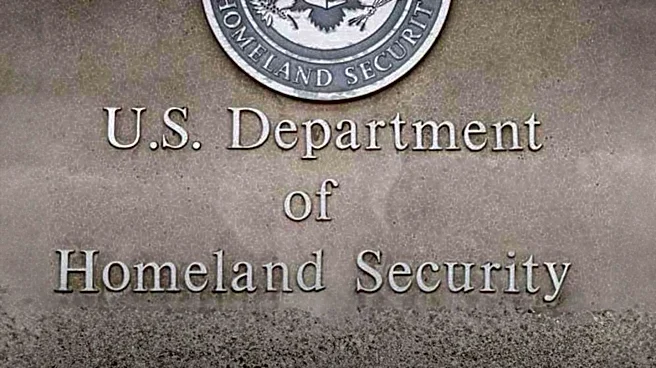
The Trump administration has awarded Texas $7.5 billion as reimbursement for the state's expenditures on border security during the previous administration. Governor Greg Abbott announced the grant, which was approved by the Department of Homeland Security
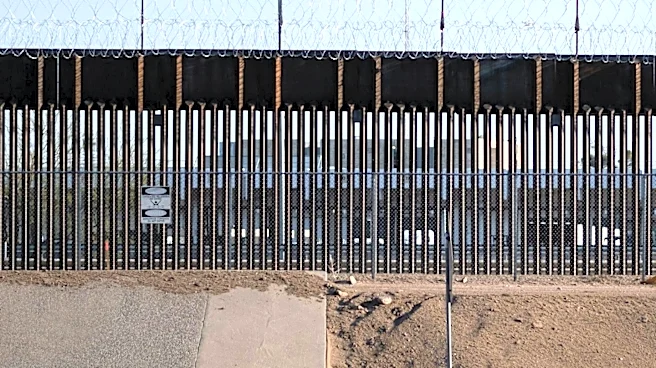
and the Federal Emergency Management Administration. This reimbursement comes 14 months after Congress authorized border funding in the One Big Beautiful Bill Act, a key legislative priority for Texas's Republican delegation and Governor Abbott. Texas had spent over $11 billion on border security through Operation Lone Star, which included funding for border wall construction, river buoys, fencing, and the deployment of Texas National Guard and Department of Public Safety personnel. Governor Abbott had initially requested full reimbursement for the state's spending, emphasizing that Texas had to bear the costs of securing the border when, in his view, the previous administration failed to do so.
Why It's Important?
This $7.5 billion reimbursement is a significant financial development for Texas, directly impacting the state's budget and potentially influencing future spending priorities. It validates the efforts of Governor Abbott and the Texas Republican delegation, including Senator John Cornyn and Representative August Pfluger, who advocated for federal support for state-led border security initiatives. The funding underscores the ongoing national debate about border security and the division of responsibilities between federal and state governments. For Texas taxpayers, this reimbursement is presented as a victory, as it offsets a substantial portion of the billions spent on Operation Lone Star. The allocation of these funds also highlights the political leverage of states in demanding federal assistance for issues they deem critical, especially when there is a change in presidential administrations with differing border policies.
What's Next?
The $7.5 billion grant will be a crucial factor in the budget that Texas lawmakers will pass when the Legislature convenes in January. The state comptroller's estimate of state revenue, also typically released in January, will now incorporate this federal funding, potentially freeing up state resources for other initiatives or allowing for tax relief. The reimbursement may also encourage other states facing similar border challenges to seek federal funding, potentially setting a precedent for future state-federal partnerships on immigration and border security. The ongoing political discourse surrounding border security is likely to continue, with this reimbursement serving as a point of discussion regarding the effectiveness and cost-sharing of such operations. Future federal policies and funding allocations for border security will be closely watched by states like Texas.
Beyond the Headlines
The reimbursement for Texas's border spending carries deeper implications for federalism and the balance of power between state and federal governments. It reflects a shift in federal policy under the Trump administration, prioritizing state-led border security efforts and acknowledging the financial burden states have incurred. This could embolden states to take more assertive roles in areas traditionally considered federal jurisdiction, particularly when they perceive a lack of federal action. The debate over who should bear the costs of border security also touches upon the broader philosophical question of national sovereignty versus state autonomy. Furthermore, the political messaging surrounding this reimbursement, framing it as a 'victory' for taxpayers and a response to perceived federal inaction, reinforces a narrative that could influence public opinion on immigration and government effectiveness in the long term.