
What's Happening?
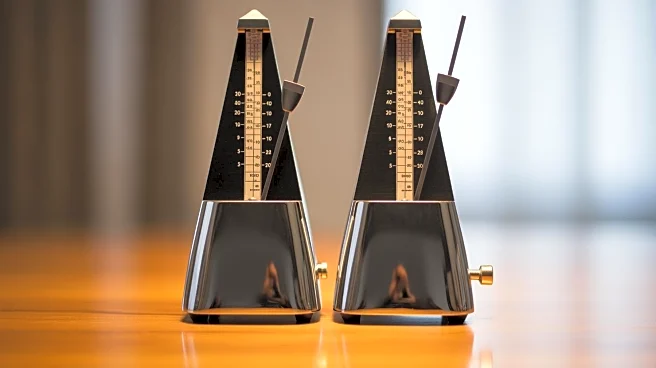
A new review published in Nature Reviews Psychology delves into the concept of interpersonal physiological synchrony, where individuals' physiological signals such as heart rate and electrodermal activity align during social interactions. This phenomenon,
often seen as a form of biological attunement, is not static but varies with the context of the interaction, such as cooperation or competition. The review, conducted by researchers from Bar-Ilan University, highlights the need for a deeper understanding of when and why this synchrony occurs and its implications for empathy and human connection. The study also suggests future research directions, including exploring group synchrony and employing multimodal approaches to better map human connections.
Why It's Important?
Understanding interpersonal physiological synchrony has significant implications for fields such as psychology, neuroscience, and social sciences. It could provide insights into the biological underpinnings of empathy and cooperation, potentially influencing therapeutic practices for social disorders. The research could also impact team dynamics in professional settings by enhancing collaboration and communication. As the study suggests, exploring group synchrony could lead to better strategies for managing crowd behavior and social coalitions, which are crucial in various societal and organizational contexts.