
What's Happening?
Young Vermonters are engaging in a supervised deer hunt as part of a youth hunting weekend, which precedes the official hunting season. This initiative aims to educate young individuals on hunting practices
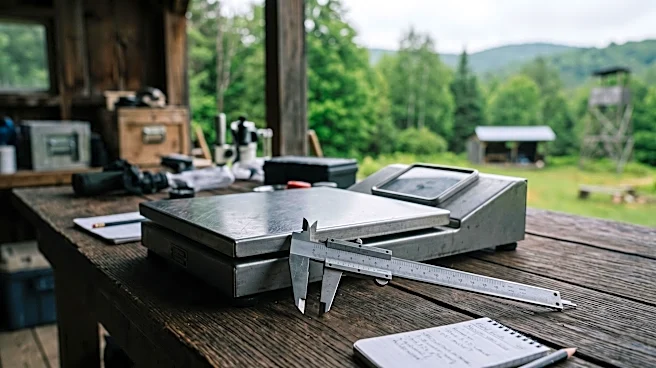
and contribute to a broader deer conservation project. Hunters are required to bring their harvested deer to designated check stations, such as the one at Back Country Sports in St. Albans. At these stations, biologists from Vermont Fish and Wildlife, alongside University of Vermont students, collect crucial data by weighing each deer, measuring its antlers, and extracting teeth. This process transforms the young hunters into 'citizen scientists,' providing valuable information about the state's deer population. For instance, 12-year-old Harper Couture successfully harvested a nearly 120-pound deer with assistance from her father, Josh Couture, highlighting the program's hands-on learning approach. The data gathered during this weekend helps biologists assess the deer herd before the general hunting season commences, and it also offers an easier hunting experience for beginners due to less spooked deer.
Why It's Important?
This youth hunting weekend is significant for several reasons, primarily for its dual focus on conservation and education. By involving young hunters in the data collection process, the program fosters an understanding of wildlife management and ecological balance from an early age. The information gathered by biologists is vital for maintaining healthy deer habitats and managing the overall deer population in Vermont. This proactive approach to conservation helps prevent overpopulation, which can lead to habitat degradation and increased disease transmission among deer. Furthermore, the program ensures the continuation of hunting traditions while instilling a sense of responsibility and ethical hunting practices in the next generation. It also provides an opportunity for families, like the Coutures, to bond over shared outdoor activities and pass down knowledge about the natural world. The program's structure, which makes hunting easier for beginners, encourages participation and ensures that new hunters have a positive and educational experience.
What's Next?
Following the youth hunting weekend, the collected data will be processed and analyzed by Vermont Fish and Wildlife biologists. This information will be integrated into broader deer management strategies for the state, influencing future hunting regulations and conservation efforts. The success of this program may lead to its continued implementation and potential expansion, further solidifying the role of youth in wildlife conservation. The young hunters, having completed their certification and participated in the scientific data collection, will likely continue to engage in hunting, applying the knowledge and ethics learned. The deer harvested during this weekend will be taken home by the hunters, with many families utilizing the meat for consumption, reinforcing the practical aspects of hunting as a food source. The program's educational impact is expected to extend beyond the immediate hunting season, shaping the participants' long-term understanding and appreciation of wildlife and natural resources.
Beyond the Headlines
Beyond the immediate benefits of deer management and youth education, this program touches upon deeper cultural and societal implications. It highlights the evolving role of hunting, moving beyond a purely recreational activity to one intertwined with scientific research and environmental stewardship. The concept of 'citizen scientists' empowers individuals, particularly youth, to contribute directly to ecological understanding and conservation efforts, fostering a sense of ownership and responsibility towards natural resources. This initiative also addresses the generational transfer of outdoor skills and traditions, which are increasingly important in an era where many young people have limited exposure to nature. By emphasizing ethical hunting and the utilization of harvested animals, the program promotes a holistic view of nature and sustainable living. It also subtly challenges urban-centric perspectives on wildlife, demonstrating how human activities, when managed responsibly, can coexist with and even benefit natural ecosystems.