





What's Happening?
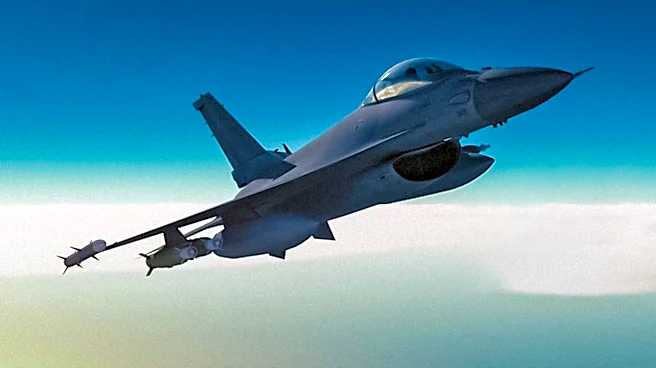
A Ukrainian F-16 pilot has established a new single-sortie record by intercepting and destroying nine Russian attack drones using only the fighter's onboard 20mm M61A1 Vulcan cannon. This achievement, reported by Ukraine’s 107th Separate Aviation Wing
on November 6, follows a previous record set by the same pilot days earlier, where eight drones were shot down. The pilot's tactic involves closing to a relatively short range to engage the small, moving targets with cannon fire, a method that also helps preserve expensive air-to-air missiles. In October alone, Ukrainian F-16s were credited with destroying approximately 1,100 Russian drones, highlighting their crucial role in Ukraine's defense against mass UAV attacks. Denmark has supplied Ukraine with over 50,000 rounds of 20mm ammunition for these F-16 cannons, providing a cost-effective solution for drone neutralization.
Why It's Important?
This development underscores the evolving nature of aerial warfare and the strategic importance of F-16 aircraft in modern conflicts. The ability of Ukrainian pilots to effectively neutralize Russian drones using onboard cannons demonstrates a significant tactical advantage, allowing for the conservation of more costly air-to-air missiles for higher-value targets. This approach not only impacts the immediate battlefield dynamics but also influences military procurement and training strategies for air forces globally. The high volume of drone interceptions by F-16s in October indicates a robust and adaptable air defense system, which is critical for protecting Ukrainian infrastructure and personnel. The supply of ammunition from allies like Denmark further highlights international cooperation in supporting Ukraine's defense capabilities and adapting to new threats.
What's Next?
The continued success of Ukrainian F-16 pilots in drone interception is likely to influence future military aid packages and training programs for Ukraine. Allies may prioritize the provision of more F-16 aircraft, spare parts, and ammunition to sustain this effective defense strategy. Furthermore, the tactics developed by Ukrainian pilots in engaging drones with cannons could become a standard operating procedure for other air forces facing similar threats. This could lead to increased research and development in cannon-based air defense systems and pilot training focused on close-range engagements. The ongoing conflict will likely continue to be a testing ground for new aerial combat strategies and technologies, with lessons learned potentially shaping the future of air warfare.
Beyond the Headlines
The reliance on cannon fire for drone interception presents a fascinating blend of traditional aerial combat techniques with modern warfare challenges. While advanced air-to-air missiles are often highlighted, the effectiveness of a well-aimed cannon shot against a drone emphasizes the enduring relevance of fundamental piloting skills and weapon systems. This also raises questions about the cost-effectiveness of various air defense solutions; using relatively inexpensive cannon rounds against drones, which themselves can be costly, offers a significant economic advantage. The psychological impact of such precise and effective engagements on both sides of the conflict, as well as on international observers, should not be underestimated. It showcases ingenuity and adaptability in the face of persistent threats, potentially inspiring new doctrines for air defense against asymmetric warfare.