


What's Happening?
The Trump administration has accused Evanston, Illinois, of racial discrimination due to its reparations program, which aims to compensate Black residents for past housing segregation. This summer, the Justice Department announced it would join a lawsuit
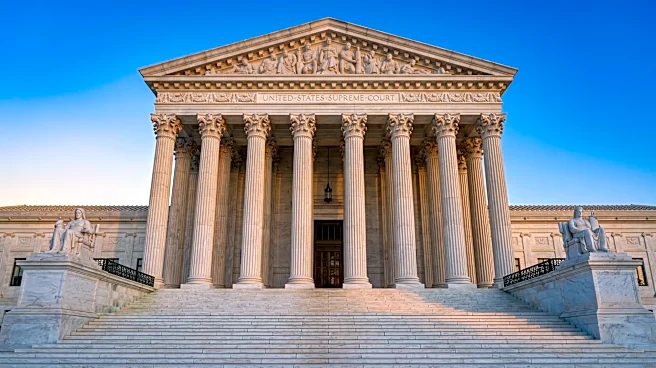
filed by a conservative group, Judicial Watch, alleging that the city's plan is unconstitutional because only Black individuals qualify. Evanston's program, the first in the U.S. to offer reparations for historical discrimination, has provided $25,000 grants to over 300 Black residents who can prove they or their ancestors lived in Evanston between 1919 and 1969, a period marked by housing segregation. The city council commissioned a report that attributed much of the segregation to past city policies, leading to an apology and a commitment of $20 million from cannabis sales and real estate transfer taxes for reparations. Evanston Mayor Daniel Biss defends the program, stating it seeks to undo the consequences of racial discrimination that created a wealth gap. However, the Justice Department argues that the program violates the Constitution's equal protection clause, which prohibits government discrimination based on race.
Why It's Important?
This legal challenge by the Trump administration against Evanston's reparations program carries significant implications for the broader reparations movement in the United States. If successful, it could undermine the viability of similar efforts in other cities and states seeking to address historical injustices against Black communities. The administration's stance highlights a fundamental disagreement on how to interpret and apply constitutional principles regarding race and equality. Critics of the administration's action argue that it ignores the specific, documented discrimination that necessitated such programs, while the Justice Department maintains that any race-based allocation of funds is discriminatory. The outcome of this case could set a precedent for whether race-based programs designed to remedy past harms are permissible under U.S. law, potentially impacting how governments can address systemic inequalities. It also underscores the ongoing debate about the role of government in rectifying historical injustices and promoting racial equity.
What's Next?
Evanston city leaders have vowed to continue paying individuals who applied for and qualified for reparations, even as the legal challenge progresses through federal court. Robin Rue Simmons, who created the program and now helps administer it, is encouraging other cities considering reparations to proceed carefully but not to be deterred. The lawsuit will likely involve extensive legal arguments regarding the interpretation of the Equal Protection Clause and the historical context of Evanston's housing policies. The courts will need to determine whether the program constitutes impermissible racial discrimination or a legitimate remedy for documented historical harm. The outcome could influence the strategies and legal frameworks adopted by other municipalities nationwide that are exploring or implementing reparations initiatives. Additionally, the Trump administration's broader effort to dismantle government programs promoting racial equity suggests that similar challenges to other race-conscious policies may emerge.
Beyond the Headlines
The legal battle over Evanston's reparations program delves into profound ethical and legal questions about collective responsibility, historical redress, and the interpretation of equality. The program attempts to address the long-term economic and social consequences of systemic racism, specifically housing segregation, which contributed to a significant wealth gap. The Justice Department's challenge, however, frames the issue as one of reverse discrimination, arguing that the Constitution demands colorblindness even when addressing historical injustices. This conflict highlights the tension between formal equality (treating everyone the same regardless of race) and substantive equality (addressing historical disadvantages to achieve equitable outcomes). The case could force a re-evaluation of how the U.S. legal system grapples with the legacies of slavery and Jim Crow, and whether targeted remedies are permissible or even necessary to achieve true equality. It also raises questions about the role of local governments in pioneering solutions to complex social issues when federal approaches are contested.