





What's Happening?
Lebanon attorney Stephen Girdwood is facing disbarment proceedings after New Hampshire’s Attorney Discipline Office accused him of misappropriating nearly $500,000 from client escrow accounts. The funds, primarily from the divorce settlement of Keith
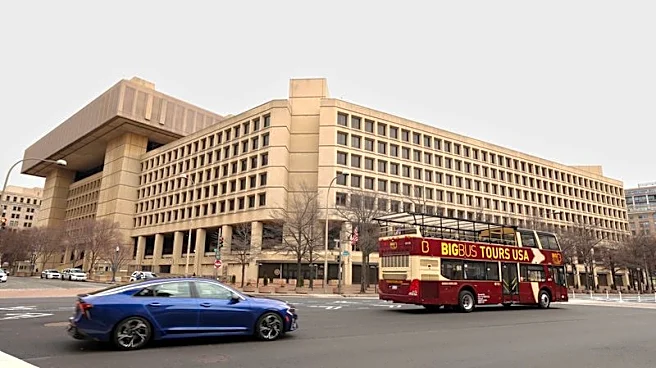
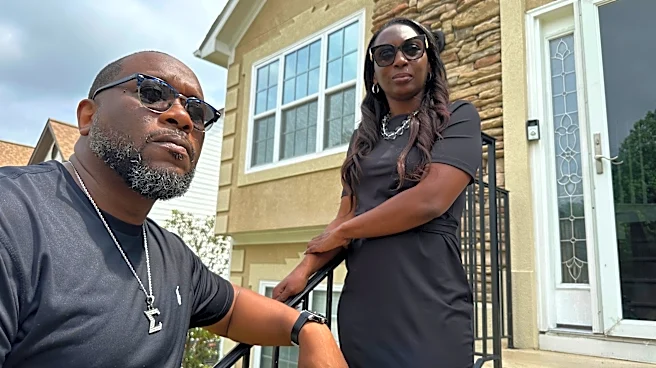
and Athena Nicholson, were allegedly diverted into an investment company called Frozen Lake Sports and Entertainment, in which Girdwood was an officer. An investigation by the discipline office found that Girdwood made unauthorized international wire transfers, including $200,000 of the Nicholsons’ funds, to HSBC Bank Hong Kong. He also made subsequent transfers to a Merrill Lynch account owned by Bruce Weissman, president of Frozen Lake. Girdwood confessed to Lebanon police, who referred the case to the FBI. During a recent hearing, a four-member panel ruled that there was 'clear and convincing' evidence supporting multiple misconduct allegations. Girdwood invoked his Fifth Amendment rights and called no witnesses. He was placed on interim suspension from practicing law in New Hampshire, Vermont, and U.S. District Court in New Hampshire. The Nicholsons, who lost approximately $300,000, are now living on Social Security, while Girdwood has filed for bankruptcy, claiming liabilities of $1.2 million.
Why It's Important?
This case is significant as it highlights a severe breach of trust within the legal profession and the devastating impact such actions can have on clients. Attorneys are entrusted with significant financial responsibilities, and the alleged misappropriation of client funds undermines the integrity of the legal system. For the Nicholsons, the loss of their divorce settlement funds has resulted in financial hardship, forcing them to rely on Social Security. This incident also exposes potential vulnerabilities in the oversight of client escrow accounts and the need for robust regulatory mechanisms to protect consumers. The involvement of an investment company and international wire transfers adds layers of complexity, raising questions about due diligence and the potential for fraudulent schemes. The ongoing FBI investigation and the disbarment proceedings underscore the serious legal and ethical consequences for attorneys who violate their professional duties, impacting public confidence in the legal profession.
What's Next?
The hearing panel has 60 days from the September 22 hearing to issue a recommendation on sanctioning for Stephen Girdwood. This recommendation will then be reviewed by the professional conduct committee at the Attorney Discipline Office, which will make its own recommendation to the Supreme Court. Ultimately, the Supreme Court will determine the final sanction, which could include disbarment. This process is expected to take several months. Concurrently, the FBI's criminal investigation into Girdwood's actions remains ongoing. Girdwood's bankruptcy filing will also proceed, with creditors, including the Nicholsons, potentially seeking to recover lost funds. The Nicholsons have applied for the New Hampshire Supreme Court’s Public Protection Fund, though they may not receive funds until the Supreme Court issues its order on Girdwood. The case may also lead to further scrutiny of investment companies and their practices, particularly those involving client funds.
Beyond the Headlines
Beyond the immediate legal and financial ramifications, this case raises profound ethical and systemic questions. The statement by Keith Nicholson's former attorney, assuring him that Girdwood, as an 'officer of the court,' would never risk disbarment or jail by touching the funds, highlights a dangerous complacency and an overreliance on the perceived integrity of legal professionals. This incident could prompt a re-evaluation of the safeguards and oversight mechanisms in place for attorney escrow accounts, potentially leading to stricter regulations or more frequent audits. The emotional toll on the victims, as evidenced by Athena Nicholson's tearful testimony and Keith Nicholson's declaration that he will never hire a lawyer again, underscores the deep erosion of trust that such misconduct causes. This case also touches on the broader issue of white-collar crime, where the perception of a 'cakewalk' for white-collar offenders compared to blue-collar criminals can fuel public cynicism about justice and equality under the law.