






What's Happening?
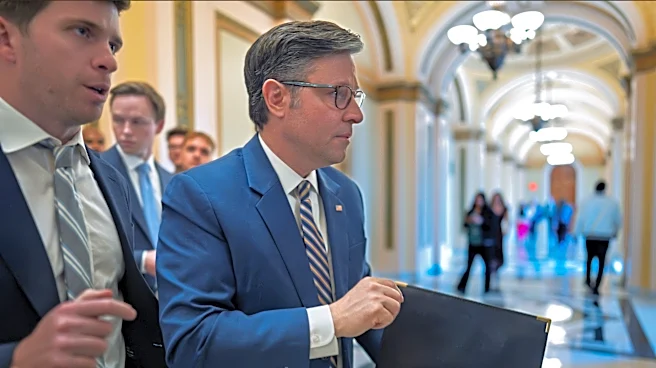
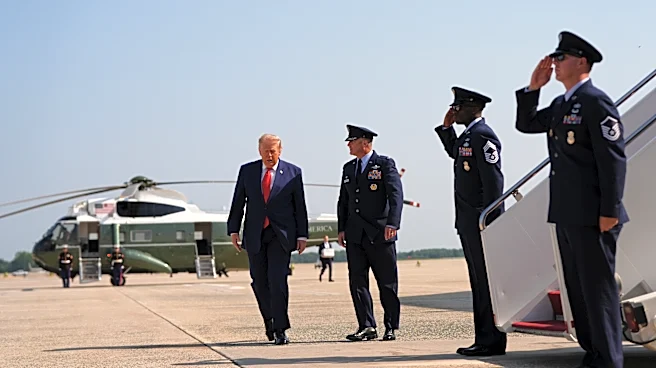
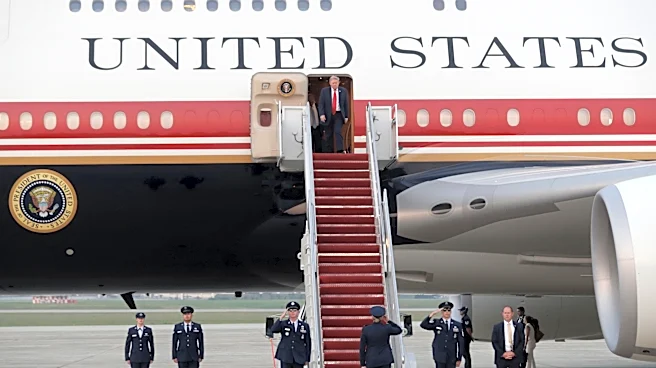
The U.S. House of Representatives has passed a resolution aimed at limiting President Trump's authority to conduct military operations in Iran. The resolution, which passed with a 214-208 vote, calls for the cessation of U.S. military involvement in Iran without
explicit congressional approval. This legislative move comes amid ongoing military engagements in Iran, which have resulted in the deaths of four American service members. The resolution saw bipartisan support, with four Republican representatives joining Democrats in the vote. This marks the second time in recent months that the House has passed such a measure, reflecting growing concern over the executive branch's military actions without legislative oversight.
Why It's Important?
The passage of this resolution underscores the ongoing tension between the legislative and executive branches over war powers and military engagement. It highlights the constitutional debate regarding the president's authority to engage in military actions without congressional consent. The resolution's passage could influence U.S. foreign policy and military strategy, particularly in the Middle East. It also reflects broader political dynamics, as some Republicans express concern over the potential political fallout of continued military involvement in Iran, especially with upcoming elections. The resolution serves as a check on presidential power, emphasizing the role of Congress in authorizing military actions.
What's Next?
Following the House's passage of the resolution, attention now turns to the Senate, where a similar measure recently failed to advance. The resolution's future remains uncertain, as it faces potential opposition in the Senate and from the Trump administration. The administration has previously disputed the constitutionality of the War Powers Act, which underpins the resolution. As lawmakers return to their districts for the midterm election campaign, the issue of military engagement in Iran may become a significant topic of debate. The resolution's passage could prompt further legislative efforts to assert congressional authority over military actions.