



What's Happening?
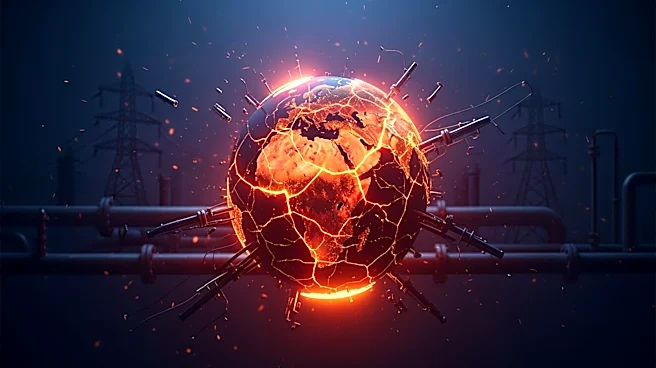
The International Energy Agency (IEA) has released a report indicating that the ongoing conflict in Iran is expected to significantly impact global natural gas supplies for the next two years. The war, which has led to the closure of the Strait of Hormuz,
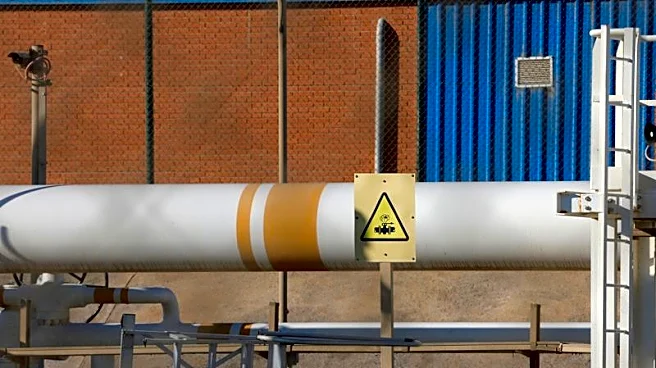
has disrupted the supply of liquefied natural gas (LNG) from Qatar, a major exporter. Iranian strikes have damaged the Ras Laffan Industrial City, reducing Qatar's LNG capacity by 17%. The IEA predicts that it could take up to five years to repair the damage, which will delay the anticipated global LNG expansion. This disruption is expected to result in a cumulative loss of 120 billion cubic meters of LNG supply through 2030. The report also notes that natural gas demand fell in March due to higher commodity prices and policy measures aimed at reducing usage.
Why It's Important?
The disruption in LNG supply due to the Iran conflict has significant implications for global energy markets, particularly affecting countries reliant on natural gas imports. The closure of the Strait of Hormuz, a critical chokepoint for oil and gas shipments, has cut off a substantial portion of global supplies, leading to increased prices and market volatility. This situation could strain economies, especially in Asia, where countries are already implementing measures to reduce natural gas usage. The prolonged tightness in the market could also impact energy security and economic stability, prompting countries to seek alternative energy sources or accelerate the transition to renewable energy.
What's Next?
The IEA's report suggests that while new LNG projects in other regions may eventually offset the losses, the market is expected to remain tight through 2026 and 2027. Countries affected by the supply disruption may need to explore alternative energy strategies, including increased investment in renewable energy and energy efficiency measures. The geopolitical situation in the Middle East will continue to be a critical factor in determining the future of global energy markets, with potential diplomatic efforts or escalations influencing the duration and impact of the current crisis.