



What's Happening?
Archaeologists in Wales have discovered what could be the largest known Roman villa in the region, buried under three feet of soil in a historical park in Margam, Port Talbot. The discovery was made by ArchaeoMargam, a collaborative project involving
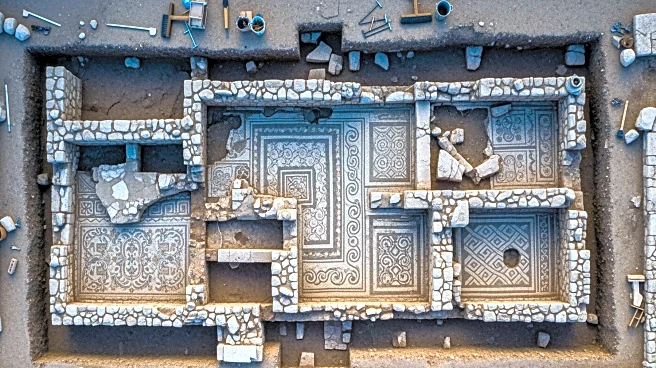
Swansea University, Neath Port Talbot Council, and Margam Abbey Church. Using ground-penetrating radar, the team uncovered a 6,156 square foot Roman complex, featuring six main rooms at the front and eight rooms at the back, all within a walled enclosure. This site, which may have been the center of a large agricultural estate, is believed to have housed a local dignitary. The villa's discovery is significant as it fills a gap in the historical record of Roman occupation in Margam, which previously had limited evidence from the period.
Why It's Important?
The discovery of this Roman villa is crucial for understanding the extent of Roman influence and settlement in Wales. It provides a 'missing piece of the puzzle' regarding the region's history during the Roman occupation, which began in 48 C.E. The villa's size and state of preservation suggest it was a significant site, possibly surrounded by other Roman structures such as trading centers and farmsteads. This finding could lead to a reevaluation of the area's historical significance and its role in the social, cultural, and economic developments of the first millennium in Wales. The potential for further discoveries in the vicinity could offer new insights into the Roman era in Britain.
What's Next?
Further archaeological exploration and excavation are likely to follow this initial discovery. Researchers will aim to uncover more about the villa's architectural features, its construction, and its eventual decline. There is also potential for discovering additional Roman structures nearby, such as bathhouses or smaller farmsteads, which could provide a more comprehensive understanding of the Roman presence in the area. The findings may prompt increased interest and investment in archaeological research in Wales, potentially leading to more discoveries that could reshape historical narratives about the region.
Beyond the Headlines
This discovery highlights the importance of archaeological technology, such as ground-penetrating radar, in uncovering historical sites that are not visible on the surface. It also underscores the collaborative efforts between academic institutions and local councils in preserving and exploring cultural heritage. The villa's potential as 'Port Talbot's Pompeii' could boost local tourism and educational opportunities, drawing attention to Wales' rich historical tapestry and encouraging further preservation efforts.