
What's Happening?
NASA astronauts aboard the International Space Station (ISS) are engaged in a variety of scientific and maintenance activities as part of Expedition 74. The crew, which includes NASA's Mike Fincke, Zena
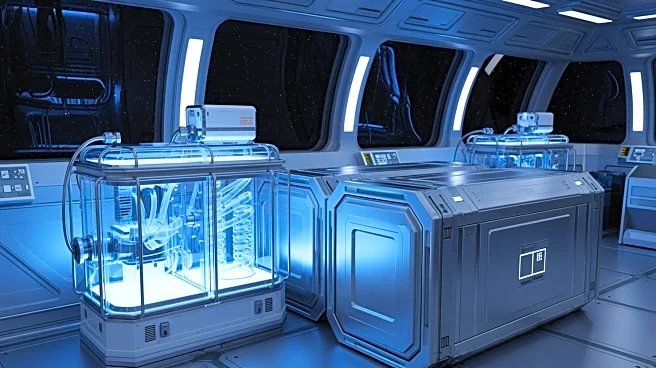
Cardman, and Chris Williams, along with international partners from JAXA and Roscosmos, is conducting research that could have significant implications for medical science. One of the key experiments involves studying stem cells in microgravity, led by NASA astronaut Zena Cardman. This research aims to explore the potential for repairing damaged organs and tissues. Additionally, the crew is preparing the JAXA HTV-X1 cargo ship for its departure in January, which involves loading it with refuse and equipment no longer needed on the ISS. The astronauts are also maintaining the station's systems, including the installation of a carbon dioxide removal system in the Kibo module.
Why It's Important?
The activities on the ISS highlight the ongoing international collaboration in space exploration and research. The stem cell experiment conducted by NASA could lead to breakthroughs in regenerative medicine, potentially offering new ways to treat injuries and diseases on Earth. The preparation of the HTV-X1 cargo ship for departure is a routine but critical task that ensures the efficient operation of the ISS. These efforts underscore the importance of the ISS as a platform for scientific research and technological development, contributing to advancements in various fields, including medicine, engineering, and environmental science. The work being done by the astronauts not only supports current missions but also lays the groundwork for future exploration, including potential missions to the Moon and Mars.
What's Next?
The next steps for the ISS crew include the continued execution of scientific experiments and the maintenance of the station's systems. The departure of the HTV-X1 cargo ship in January will be a significant logistical milestone, as it will make room for future deliveries and experiments. The results of the stem cell research will be analyzed to assess the impact of microgravity on cell growth and development, which could inform future studies and applications. As the ISS continues to serve as a hub for international cooperation, the findings from these experiments will be shared with the global scientific community, potentially leading to new collaborations and innovations.