






What's Happening?
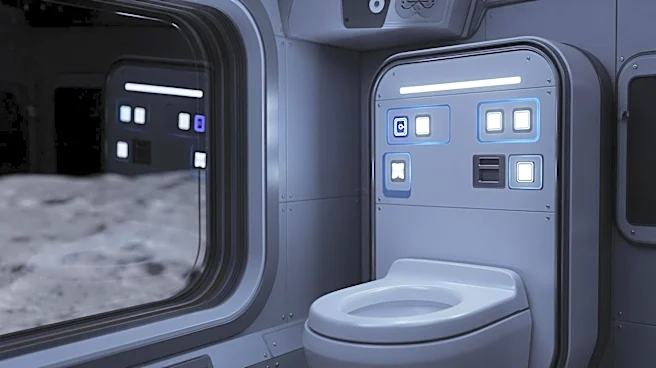
NASA's Orion spacecraft, part of the Artemis II mission, provides significantly more interior space for astronauts compared to the Apollo command module. With 330 cubic feet of habitable space, Orion is nearly 60% larger than Apollo, accommodating four
astronauts for a 10-day mission around the Moon. The design, developed by Lockheed Martin, prioritizes safety and efficiency, opting for a capsule shape over a winged vehicle due to existing data from Apollo missions. Orion's design reflects advancements in space technology, offering more comfort and functionality for long-duration missions.
Why It's Important?
The increased space in Orion represents a significant advancement in spacecraft design, enhancing the comfort and safety of astronauts on long missions. This development is crucial for future lunar and Mars missions, where extended periods in space require improved living conditions. The design choices made for Orion reflect NASA's commitment to leveraging past experiences while innovating for future exploration. The success of Artemis II could influence the design of future spacecraft, impacting the broader space industry and international collaboration in space exploration.