



What's Happening?
Denmark has received approval from the European Commission for a €5 billion subsidy plan aimed at advancing its offshore wind energy projects. This approval follows a failed auction in December 2024, prompting Denmark's Energy Agency to adopt the two-way
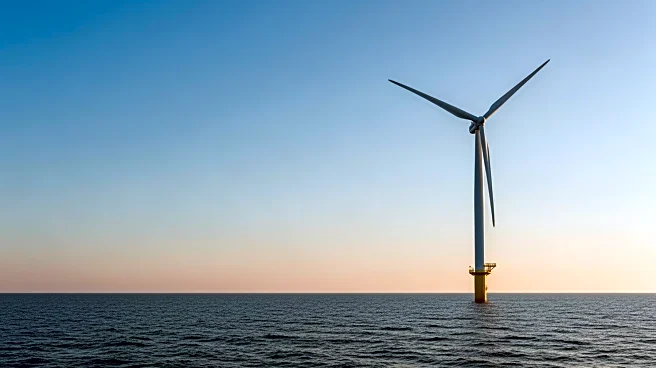
contract for difference (CfD) model, a strategy that has seen success in the UK. The approved plan supports the construction and operation of two major offshore wind farms, Hesselø and North Sea I Mid, expected to be operational by 2032. These projects are part of Denmark's broader goal to transition towards a net-zero economy and meet the EU's 2030 renewable energy targets. The Hesselø wind farm will have a capacity of at least 800 MW, while North Sea I Mid will have a minimum capacity of 1 GW. Together, they are projected to produce around 25% of Denmark's total electricity output from the previous year.
Why It's Important?
This development is significant as it underscores Denmark's commitment to renewable energy and its leadership in offshore wind power. The adoption of the CfD model is expected to provide financial stability and attract investment, crucial for achieving Denmark's ambitious renewable energy targets. The successful implementation of these projects could serve as a model for other countries looking to expand their renewable energy infrastructure. Additionally, the projects are expected to contribute significantly to Denmark's electricity supply, reducing reliance on fossil fuels and supporting the EU's climate goals. However, there are concerns about existing projects that lack subsidy contracts and onshore projects that are not eligible for CfDs, which could impact the overall transition to renewable energy.
What's Next?
The next steps involve the tender process for the two wind farms, with a deadline for proposals set for May 2026. The projects will need to incorporate 'nature-inclusive' designs to support marine life, which could set new standards for environmental considerations in renewable energy projects. As the projects progress, stakeholders will be watching closely to see how the CfD model impacts the financial viability and success of these wind farms. The outcome could influence future policy decisions and investment strategies in the renewable energy sector across Europe.