
What's Happening?
Colleges across the United States are experiencing a surge in interest in artificial intelligence (AI) courses, prompting institutions to adapt their curricula to meet this demand. Despite a decline in enrollment
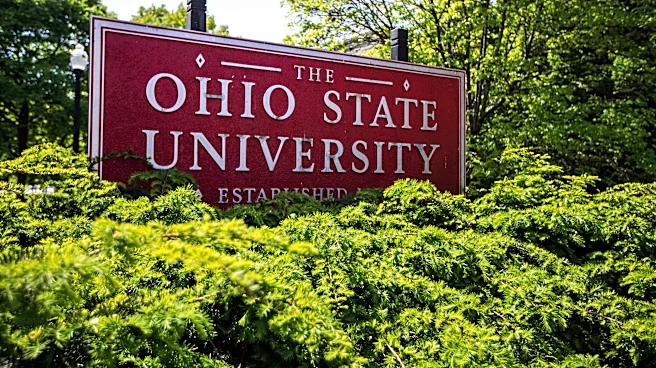
for traditional computer science programs, AI-related courses are attracting students from various majors. Virginia Commonwealth University, for example, has introduced an AI minor, while Purdue University has made AI a graduation requirement. Harvard University is incorporating AI topics into freshman writing classes, and Ohio State University has implemented an AI fluency requirement. This shift is driven by the growing importance of AI skills in the job market, as employers increasingly seek candidates with AI literacy. The trend is also evident at Northwestern University, where non-computer science majors are enrolling in AI courses, leading to the introduction of an AI major and streamlined prerequisites.
Why It's Important?
The integration of AI into college curricula reflects the technology's growing influence across various industries. As AI becomes a critical component of the modern workforce, students equipped with AI skills are likely to have a competitive edge in the job market. This shift in educational focus is essential for preparing graduates to navigate an economy increasingly driven by technology and innovation. The emphasis on AI literacy across disciplines highlights the technology's potential to transform fields beyond computer science, including psychology, music, and the arts. By democratizing AI education, colleges are ensuring that students from diverse backgrounds can contribute to and benefit from advancements in AI.
What's Next?
As colleges continue to expand their AI offerings, the focus will likely shift towards developing interdisciplinary programs that integrate AI with other fields of study. Institutions may also explore partnerships with industry leaders to provide students with practical experience and insights into real-world applications of AI. Additionally, the rapid pace of technological change will require ongoing updates to curricula to ensure that students are learning the most current and relevant skills. The success of these initiatives will depend on the ability of colleges to balance the demand for AI education with the need to maintain rigorous academic standards.