
What's Happening?
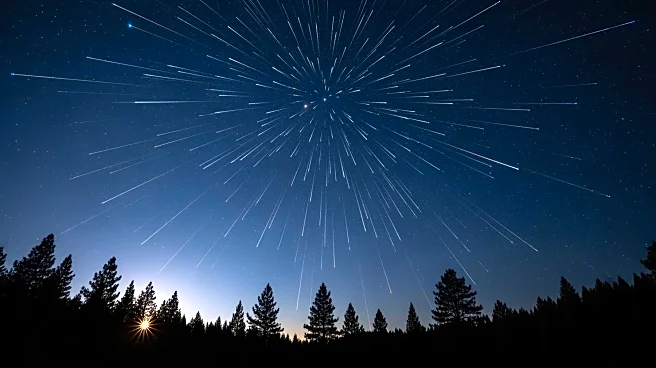
The Geminid meteor shower, considered one of the most reliable annual meteor showers, is set to peak on December 13 and 14, 2025. According to NASA, this meteor shower is a result of Earth passing through
a cloud of dust from the asteroid 3200 Phaethon. Under optimal conditions, the Geminids can produce over 120 meteors per hour. The American Meteor Society advises that the best viewing times are from 10 p.m. on December 13 to 3 a.m. on December 14, with the radiant point located in the Gemini constellation. The shower is known for its vivid colors and high intensity, often producing fireballs.
Why It's Important?
The Geminid meteor shower is significant as it provides a spectacular natural display that can be observed without special equipment, making it accessible to the general public. This event not only offers a chance for scientific observation and public engagement with astronomy but also highlights the importance of preserving dark skies for astronomical events. The shower's visibility across the U.S. encourages interest in space and science, potentially inspiring future generations of astronomers and scientists.
What's Next?
Following the peak of the Geminid meteor shower, skywatchers can look forward to the Quadrantid meteor shower, which will peak on January 3-4, 2026. The American Meteor Society notes that while the full moon may outshine some of the meteors, clear skies could still offer a good viewing opportunity. Additionally, the first full moon of 2026, known as the Wolf Moon, will be visible on January 3, providing another celestial event for enthusiasts to observe.