




What's Happening?
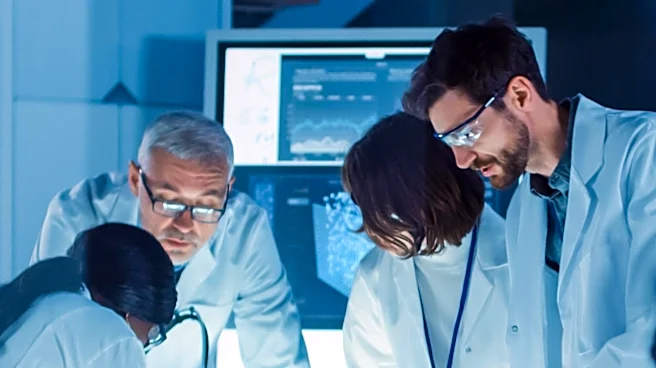
New York Tech's Human Factors and Neuroscience (HFAN) research group, led by Robert Alexander, Ph.D., has successfully opened its lab to high school students, providing them with hands-on experience in psychological and biomedical research. Over the past
two summers, more than a dozen high schoolers have actively participated in ongoing projects, learning research methodology, collecting and analyzing data, and training on eye-tracking technology. This initiative aims to make laboratory research accessible to high school students, overcoming traditional barriers such as rules governing minors' participation and the difficulty researchers face in creating such programs. The program has seen success, with five former high school participants enrolling at New York Tech and continuing their work with Alexander's lab as college students.
Why It's Important?
This program is vital for building a robust STEM pipeline in the U.S. by engaging students early in authentic research experiences. Many high school students face significant hurdles in accessing real-world scientific environments. By providing structured onboarding, training, and guidance, New York Tech is fostering a new generation of researchers and scientists. This early exposure not only demystifies scientific careers but also equips students with critical thinking, data analysis, and problem-solving skills. The program's success in converting high school participants into college students at New York Tech demonstrates its effectiveness in retaining talent within STEM fields and potentially addressing future workforce needs in science and technology.
What's Next?
The HFAN research group plans to continue expanding its high school research program, building on its growing online presence and connections with local high schools. The goal is to provide more students with meaningful research experience, professional skill development, and exposure to potential career paths in STEM. The program will likely continue to focus on projects related to visual information processing, such as identifying cancerous lung nodules on X-rays or spotting melanoma on simulated skin lesions. The long-term objective is to support students' growth in research and technology, regardless of their chosen higher education institution, thereby contributing to a broader and more diverse scientific community.
Beyond the Headlines
This initiative highlights a broader trend in education towards experiential learning and early career exposure. By allowing high school students to contribute to real knowledge production, the program challenges the traditional 'summer camp' model of youth engagement. It also addresses the critical need for diversity and inclusion in STEM, potentially inspiring students from underrepresented backgrounds to pursue scientific careers. The program's emphasis on troubleshooting and adapting to unexpected results teaches students the true nature of scientific inquiry, moving beyond rote memorization to embrace creativity and resilience. This approach could serve as a model for other institutions looking to strengthen their STEM pipelines and prepare students for the complexities of modern scientific research.