


What's Happening?
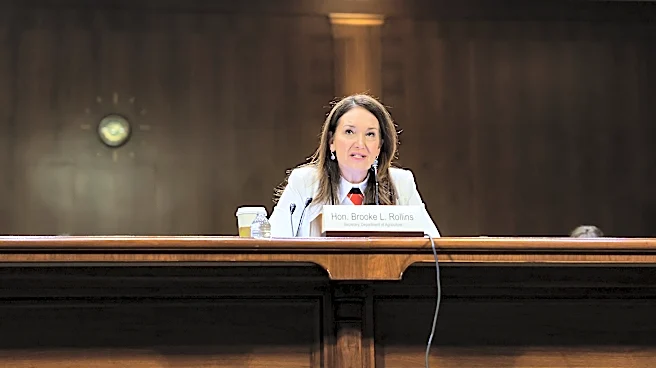
On November 10, 2026, U.S. Secretary of Agriculture Brooke L. Rollins and U.S. Secretary of the Interior Doug Burgum announced a proposed federal rule by the USDA. This rule aims to update the process for issuing grazing permits, including eligibility
and qualification criteria. Additionally, it seeks to revise grazing fee provisions to ensure consistent fee-setting across national forests and grasslands in 16 contiguous Western states. The objective is to create a more seamless and standardized practice for American ranchers, thereby benefiting rural communities by supporting both small and large ranching operations and fostering local job creation. This initiative is part of a broader effort to enhance agricultural practices and economic stability in these regions.
Why It's Important?
This proposed USDA rule holds significant importance for the U.S. agricultural sector, particularly for ranchers in the Western states. By streamlining grazing permit processes and standardizing fees, the rule aims to reduce administrative burdens and provide greater predictability for ranching operations. This stability can encourage investment in ranching, support the livelihoods of rural communities, and potentially increase the efficiency of livestock production. The consistent fee-setting across multiple states could also level the playing field for ranchers, preventing disparities that might arise from varied local regulations. For consumers, a more stable and efficient ranching industry could contribute to a more consistent supply of meat products, although direct price impacts are not immediately clear. The rule's focus on job creation in rural areas also addresses broader economic development goals.
What's Next?
Following the announcement of the proposed rule, the next phase will involve a period for public comment and review. Stakeholders, including ranchers, environmental groups, and state and local governments, will have the opportunity to provide feedback on the proposed changes. The USDA and the Department of the Interior will then consider these comments before finalizing the rule. Once finalized, the rule will be implemented across the 16 Western states, impacting how grazing permits are issued and fees are calculated. The long-term effects will be monitored to assess its success in supporting ranching operations, promoting rural economic growth, and ensuring sustainable land management practices on national forests and grasslands.
Beyond the Headlines
Beyond the immediate administrative and economic benefits, this proposed rule touches upon the complex balance between agricultural production and environmental stewardship on federal lands. The standardization of grazing practices could lead to more consistent environmental regulations, potentially impacting biodiversity, water resources, and land health in these sensitive ecosystems. There could be debates regarding the adequacy of the revised grazing fees in covering the costs of land management and conservation efforts. Furthermore, the rule's emphasis on supporting both small and large ranching operations highlights ongoing discussions about the structure of American agriculture and the role of federal policy in shaping it. The success of this rule will depend not only on its implementation but also on its ability to foster cooperation among diverse stakeholders with often competing interests.