






What's Happening?
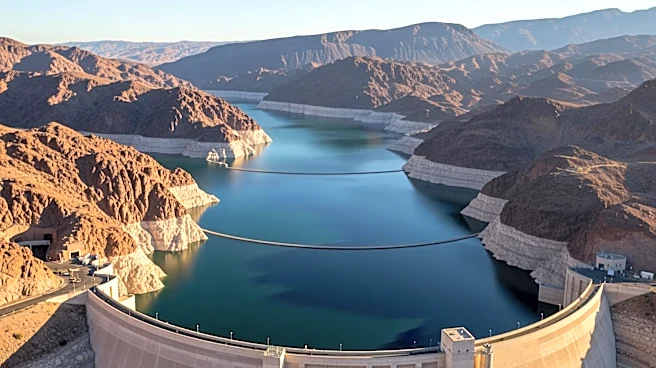
Arizona, California, and Nevada have announced a temporary plan to conserve water from the Colorado River, following the driest winter on record. The states aim to save up to 1 million acre-feet of water through 2028, adding to previous cuts, totaling
3.2 million acre-feet. This initiative is crucial as the Colorado River supports 40 million people across seven U.S. states, two Mexican states, and Native American tribes. The U.S. Bureau of Reclamation plans to release more water into Lake Powell to maintain hydropower production. The plan requires approval from federal officials and state lawmakers. The states have faced challenges in reaching a long-term agreement, with negotiations stalling and calls for a mediator to assist in discussions.
Why It's Important?
The Colorado River is a vital water source for millions, and its depletion poses significant risks to agriculture, urban water supplies, and hydropower. The temporary plan is a critical step in addressing the chronic overuse and effects of climate change on the river. The initiative highlights the urgent need for collaborative solutions to ensure the river's sustainability. The plan's success could influence future water management strategies and policies, impacting water availability and economic stability in the region. The situation underscores the broader challenges of managing natural resources amid environmental changes.
What's Next?
The plan awaits approval from federal and state authorities. Meanwhile, the U.S. Bureau of Reclamation continues to seek a comprehensive agreement among all states relying on the Colorado River. The Upper Basin states have expressed concerns about the plan's sufficiency and are advocating for further measures to protect Lake Powell. The ongoing negotiations and potential need for a mediator highlight the complexity of water management in the region. The outcome of these discussions will be crucial in shaping the future of water distribution and conservation efforts.