



What's Happening?
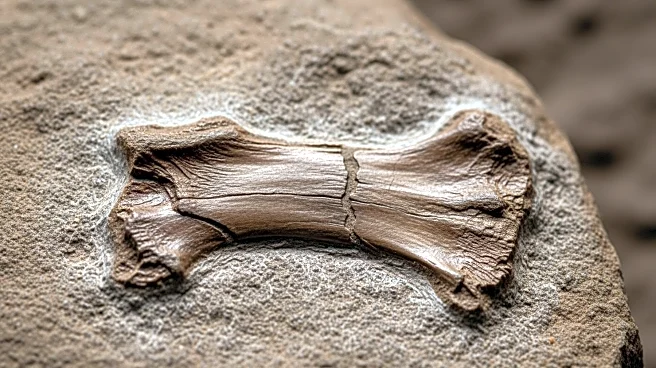
A nearly complete fossil of Alnashetri cerropoliciensis, a tiny predatory dinosaur, has been discovered in Argentina's La Buitrera site. Weighing less than a chicken, this fossil provides new insights into the evolution of alvarezsaurs, a group of small
dinosaurs. The fossil, dating back 95 million years, challenges the previous theory that alvarezsaurs evolved smaller statures due to a diet of ants and termites. The new specimen reveals long forelimbs and well-developed fingers, suggesting a broader range of prey than previously thought. This discovery highlights the diversity and adaptability of dinosaur species, offering a deeper understanding of their evolutionary paths.
Why It's Important?
The discovery of Alnashetri cerropoliciensis is significant as it challenges existing theories about the evolutionary adaptations of alvarezsaurs. By revealing anatomical features that differ from the expected traits of ant-eating dinosaurs, the fossil suggests a more complex evolutionary history. This finding prompts a reevaluation of the ecological niches occupied by small predatory dinosaurs and their survival strategies. The research contributes to the broader understanding of dinosaur evolution, emphasizing the importance of continuous exploration and analysis of fossil records. Such discoveries can reshape scientific perspectives on prehistoric life and its development over millions of years.