






What's Happening?
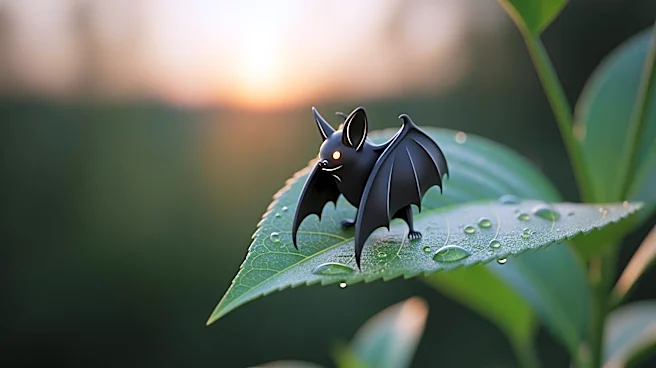
Bats flying over gardens and yards at night are responding to the abundance of insects below, signaling a healthy local ecosystem and providing natural pest control. According to the United States Department of Agriculture, a single bat can consume hundreds
of insects during several hours of feeding, targeting mosquitoes, moths, beetles, crickets, and leafhoppers. These insects are often serious crop and forest pests or spread diseases to humans and livestock. Bats use echolocation, a biological sonar system, to hunt these insects in complete darkness, allowing them to navigate complex spaces without colliding with objects. Gardens with diverse flowers, trees, and small water sources create insect hotspots after sunset, attracting bats. This relationship forms part of a larger ecological network where diverse plant life supports insect populations, which in turn attract bats.
Why It's Important?
The presence of bats in residential areas provides significant ecological benefits, including natural pest control, which can reduce the need for chemical pesticides. This is particularly important for agriculture, as bats consume major crop pests, saving farmers substantial amounts of money annually. For example, in Brazil, city-dwelling bats save farmers an estimated $390 million annually by consuming agricultural pests. Additionally, bats play a crucial role in pollination, especially for night-blooming plants like agave, which rely on bats for reproductive success. Encouraging bat populations through habitat conservation, such as installing bat houses, can enhance these benefits, contributing to biodiversity and ecosystem health.
What's Next?
Homeowners and communities can support bat populations by creating environments that attract and sustain them. This includes planting diverse vegetation, maintaining water sources, and installing bat houses. Proper placement of bat houses is crucial, as bats show strong loyalty to existing roost sites. While occupancy may take time, once established, bats return to the same roost year after year. Educating the public about the ecological benefits of bats and dispelling myths about disease transmission can further support conservation efforts. As bats continue to provide essential ecosystem services, their role in pest control and pollination may become increasingly recognized and valued.
Beyond the Headlines
Bats are often misunderstood due to associations with disease transmission and their nocturnal habits. However, fewer than one percent of bats carry rabies, and most species feed exclusively on insects or pollen. Promoting bat conservation can help shift public perception and highlight their ecological importance. Bats also contribute to forest regeneration by spreading seeds, supporting plant and tree growth. Their role as night pollinators complements the work of bees, butterflies, and birds during daylight hours, underscoring their integral part in maintaining healthy ecosystems.