








What's Happening?
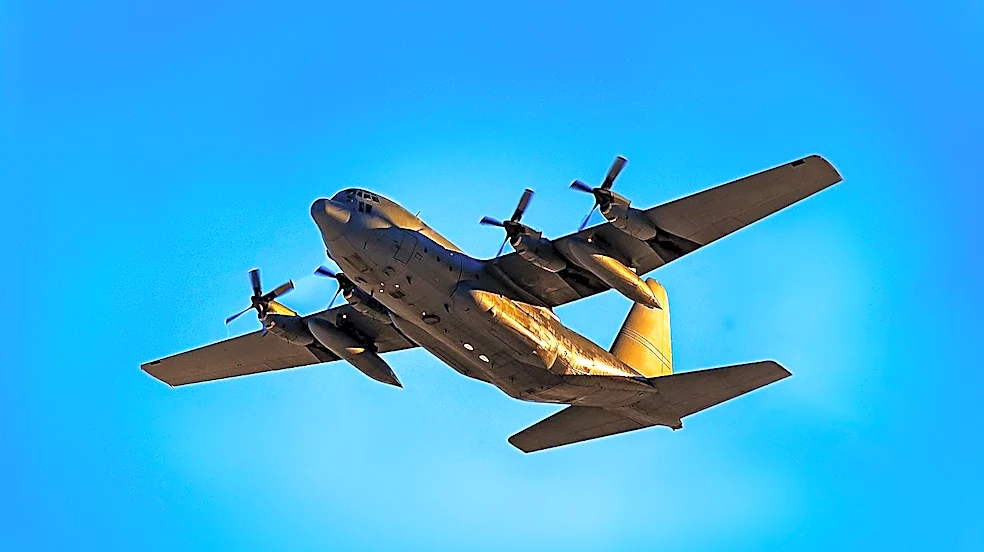
Lockheed Martin has delivered a C-130J-30 Super Hercules aircraft to the U.S. Navy at its Marietta, Georgia, facility. This aircraft is slated to become the first E-130J Phoenix II, a next-generation platform for the Navy's 'Take Charge and Move Out'
(TACAMO) mission. The TACAMO mission involves receiving, verifying, and relaying orders from the President, Secretary of Defense, and other military leaders, primarily to nuclear-armed submarines. The E-130J will replace the aging E-6B Mercury fleet, which has performed the TACAMO mission since the late 1990s. The Navy plans to acquire a total of 31 E-130Js, with three currently under contract. This delivery marks a significant step in modernizing the nation's strategic communications network, ensuring the continuity of command and control for nuclear forces.
Why It's Important?
The delivery of the C-130J-30 for the TACAMO mission is crucial for maintaining the U.S. nuclear deterrent and strategic communication capabilities. The E-6B Mercury fleet, derived from the Boeing 707, is nearing the end of its operational life, necessitating a modern replacement. The E-130J Phoenix II, an extended version of the C-130J, offers enhanced reliability and adaptability for this critical role. This modernization effort ensures that the President and other military leaders can effectively communicate with nuclear-armed submarines, even in extreme circumstances, thereby bolstering national security. The transition to the E-130J also highlights the ongoing evolution of military aircraft to meet contemporary defense needs and technological advancements.
What's Next?
Following its delivery, the C-130J-30 will undergo a mission systems integration process, with Northrop Grumman serving as the prime contractor and RTX’s Collins Aerospace providing Very Low Frequency systems. This integration will transform the airframe into the E-130J Phoenix II, specifically configured for the TACAMO mission. The Navy aims to acquire a total of 31 E-130Js, indicating further contracts and deliveries in the coming years. This transition will involve extensive testing and training to ensure the new fleet is fully operational and capable of executing its vital strategic communication responsibilities. The Air Force is also considering the C-130J-30 for its 'Looking Glass-Next' program, which could lead to further orders for Lockheed Martin.
Beyond the Headlines
The adoption of the E-130J for the TACAMO mission underscores a broader trend in military aviation towards more versatile and cost-effective platforms. While the E-6B performed both TACAMO and 'Looking Glass' missions, the E-130J will focus solely on TACAMO, with the Air Force resuming the 'Looking Glass' mission. This specialization could lead to more efficient resource allocation and optimized aircraft designs for specific strategic roles. The C-130J's proven reliability and adaptability make it a suitable choice for such a critical mission, reflecting a strategic decision to leverage existing, robust airframes for new, demanding requirements. This move also highlights the continuous investment in maintaining a robust and resilient nuclear command and control infrastructure in an evolving global security landscape.