






What's Happening?
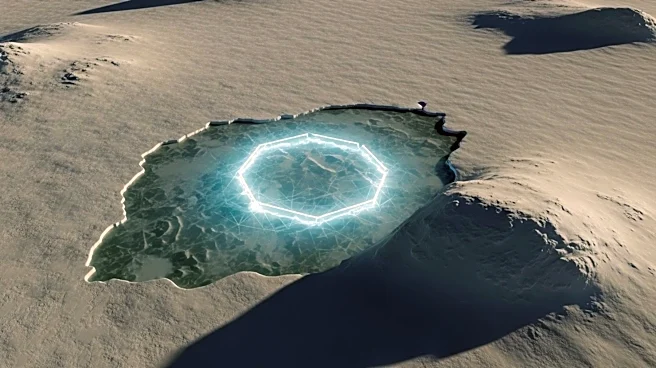
Geoscientists have discovered a massive structure beneath Antarctica, believed to be older than the continent itself. The structure, named the East Antarctic Fan-shaped Basin Province, was identified using gravity measurements, subglacial topography,
and magnetic data. It consists of several small basins forming a large subglacial lake. The structure likely formed when the Earth's crust began to separate, influencing the breakup of the supercontinent Gondwana. This discovery provides new insights into the geological history of Antarctica and its role in the formation of current continents.
Why It's Important?
The discovery of this ancient structure offers significant insights into the geological processes that shaped the Earth's continents. Understanding the formation and evolution of such structures can inform current geological models and improve predictions about tectonic activity. The findings also highlight the potential influence of ancient geological formations on current environmental conditions in Antarctica, which could have implications for climate research and understanding ice sheet dynamics. This research underscores the importance of exploring hidden geological features to gain a comprehensive understanding of Earth's history.
What's Next?
Further research is needed to explore the full extent and implications of the East Antarctic Fan-shaped Basin Province. Scientists may conduct additional studies to understand how this structure influences current geological and environmental processes in Antarctica. This ongoing research could provide valuable data for climate models and contribute to the understanding of global tectonic activity. The discovery also opens new avenues for exploring other hidden geological features beneath Antarctica's ice, potentially revealing more about the continent's ancient past.