





What's Happening?
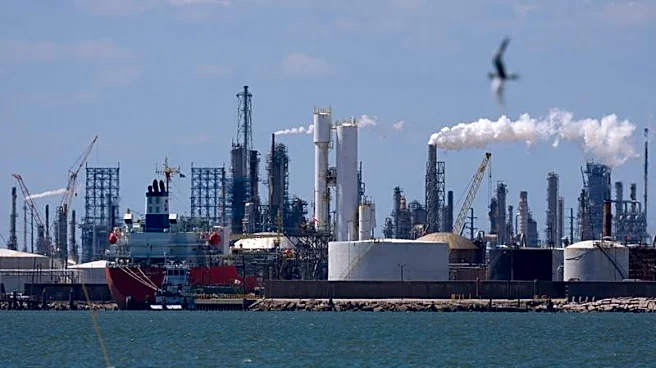
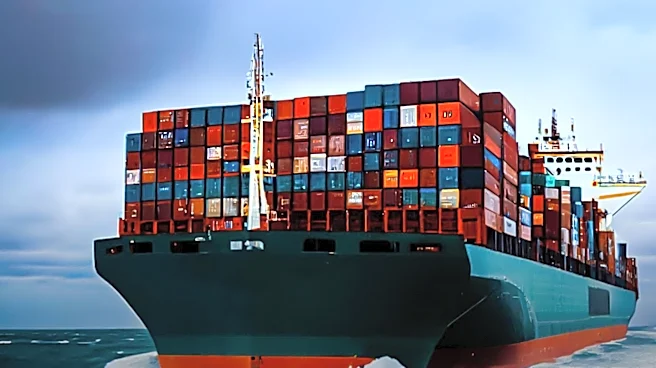
A fleet of 10 Japan-linked vessels has begun exiting the Strait of Hormuz after being stranded for months due to disruptions caused by the Iran war. According to shipping data from LSEG, these vessels include six very large crude carriers (VLCCs) loaded
with 12 million barrels of Middle Eastern crude, two chemical tankers, a vehicle carrier, and a container ship. The crude was sourced from Saudi Arabia, the United Arab Emirates, and Qatar, and was loaded between late February and early March. Most of these vessels are managed by Mitsui O.S.K. Lines (MOL), a Japanese shipping company that has emphasized the safety of its seafarers, cargo, and vessels while navigating the strait. Additionally, a supertanker carrying Saudi crude for South Korea also left the strait over the weekend.
Why It's Important?
The exit of these vessels marks a significant development in the ongoing disruptions in the Strait of Hormuz, a critical chokepoint for global oil shipments. The prolonged stranding of these ships had implications for global oil supply chains, potentially affecting oil prices and availability. The safe passage of these vessels could help stabilize the supply of crude oil from the Middle East to major markets like Japan and South Korea, which are heavily reliant on these imports. This development also underscores the geopolitical tensions in the region and their impact on international trade and energy security.
What's Next?
As these vessels continue their journey, stakeholders will be closely monitoring the situation in the Strait of Hormuz for any further disruptions. The safe passage of these ships may encourage other shipping companies to resume operations in the region, potentially normalizing trade routes. However, the geopolitical situation remains volatile, and any escalation in tensions could lead to renewed disruptions. Shipping companies and oil importers will likely continue to assess risk and adjust their strategies accordingly.