





What's Happening?
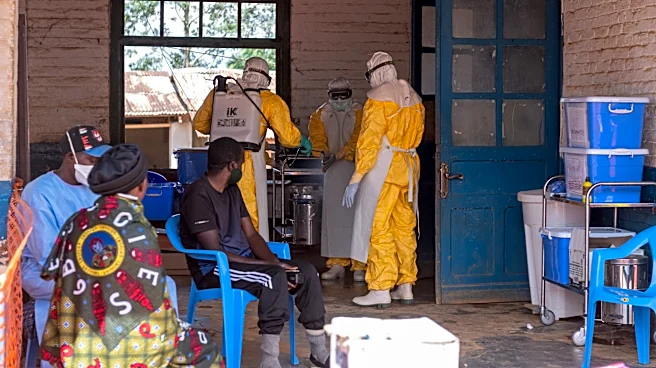
A new Ebola outbreak, originating in the Democratic Republic of Congo, is rapidly spreading across Central Africa, with confirmed cases in Uganda and potential threats to neighboring countries. The outbreak is attributed to the Bundibugyo virus, a strain
for which there is no vaccine, making it difficult to detect and control. The situation is further complicated by the recent dismantling of the U.S. Agency for International Development (USAID), which has hampered efforts to deliver timely tests and treatments. The absence of USAID has disrupted established networks of trust and slowed the response to the virus, as the agency previously played a crucial role in disease surveillance and outbreak response. The outbreak is occurring in a volatile region, already strained by conflict and displacement, which complicates containment efforts.
Why It's Important?
The outbreak poses a significant threat to regional stability and public health, with the potential to destabilize an already fragile area. The withdrawal of USAID has left a gap in global health security, reducing the capacity for early detection and rapid response to such crises. This situation highlights the broader implications of reduced international aid and cooperation, as the lack of infrastructure and support can lead to unchecked spread of infectious diseases. The outbreak also underscores the importance of maintaining robust global health networks to manage and mitigate the impact of such emergencies. The potential for the virus to spread beyond Africa raises concerns for international health security, emphasizing the interconnectedness of global health systems.
What's Next?
Efforts to contain the outbreak will require a coordinated international response, focusing on increasing lab capacity for accurate testing and scaling up humanitarian aid to address both immediate and fundamental health needs. Building trust within affected communities is crucial, as is ensuring that aid workers operate ethically and effectively. The international community may need to step in to fill the void left by USAID, providing resources and expertise to manage the crisis. Monitoring and surveillance systems must be strengthened to prevent further spread, and there is a need for long-term investment in health infrastructure to better prepare for future outbreaks.
Beyond the Headlines
The outbreak highlights the ethical and logistical challenges of providing aid in conflict zones, where distrust of outsiders can hinder response efforts. It also raises questions about the long-term impact of reduced U.S. involvement in global health initiatives, as the dismantling of USAID has left vulnerable regions without critical support. The situation serves as a reminder of the importance of sustained international cooperation and investment in public health to prevent and manage global health threats.