




What's Happening?
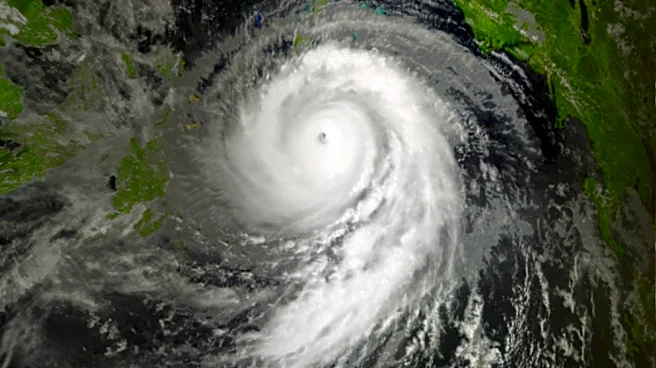
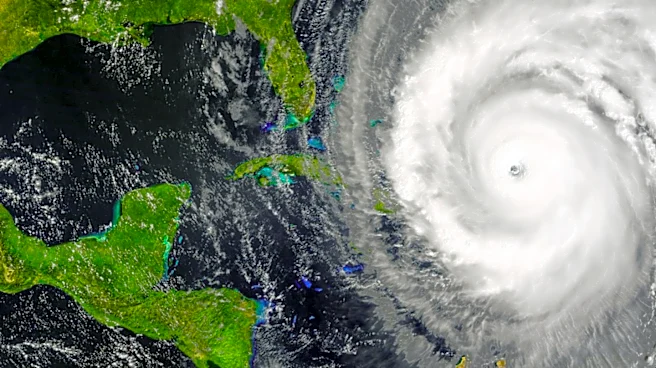
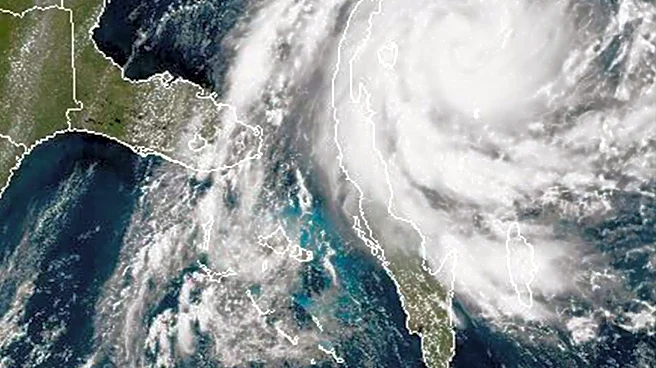
Hurricane Erin, the fifth named storm of the 2025 Atlantic hurricane season, escalated to become the first major hurricane and the first Category 5 hurricane of that year. The U.S. Air Force 403rd Wing documented the storm's intensity by releasing video
footage of one of its planes entering the eye of Hurricane Erin. ABC News Chief Meteorologist Ginger Zee provided updates on the storm as it tracked parallel to the East Coast, initially as a Category 2 hurricane. The storm's progression and significant intensification highlight the severe nature of the 2025 hurricane season.
Why It's Important?
The classification of Hurricane Erin as a Category 5 storm underscores the increasing intensity of Atlantic hurricanes, posing significant threats to U.S. coastal regions. Such powerful storms can lead to widespread destruction, including severe flooding, infrastructure damage, and potential loss of life, impacting local economies and requiring extensive federal and state resources for disaster response and recovery. The U.S. Air Force's mission to fly into the eye of the hurricane is crucial for gathering vital meteorological data, which aids forecasters in improving prediction models and issuing more accurate warnings. This data is essential for emergency management agencies to prepare and evacuate communities effectively, thereby mitigating potential harm and economic disruption across the affected areas.
What's Next?
Given the historical impact of Category 5 hurricanes, future actions will likely focus on enhancing coastal resilience and improving early warning systems. Meteorological agencies will continue to analyze data collected from storms like Erin to refine hurricane forecasting models. This will inform policy decisions regarding urban planning in vulnerable coastal zones and the allocation of resources for disaster preparedness. Communities along the East Coast, particularly those prone to hurricane impacts, will need to review and update their evacuation plans and emergency protocols. The insights gained from the 2025 season, particularly from Hurricane Erin, will also influence discussions on climate change and its potential role in the increasing frequency and intensity of extreme weather events.
Beyond the Headlines
The occurrence of a Category 5 hurricane like Erin in 2025 raises deeper questions about the long-term implications of climate change on hurricane activity. The scientific community continues to explore the relationship between rising ocean temperatures and the intensification of tropical cyclones. This event could prompt further investment in climate research and the development of innovative technologies for storm mitigation and adaptation. Ethically, it highlights the disproportionate impact of such disasters on marginalized communities, potentially leading to calls for more equitable disaster preparedness and recovery efforts. Culturally, these events often foster a sense of community resilience but also underscore the profound human and environmental costs of extreme weather, influencing public discourse on environmental policy and sustainable living.