





What's Happening?
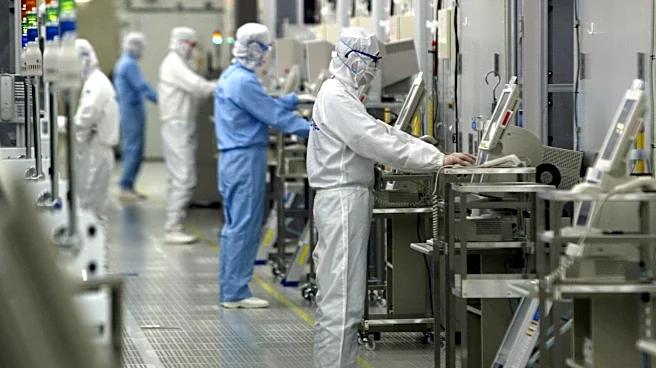
Semiconductor Manufacturing International Corporation (SMIC), founded in Shanghai in 2000, has been central to China's efforts to develop domestic semiconductor manufacturing capabilities and reduce reliance on foreign technology. Initially attracting
international investment and talent, SMIC rapidly expanded its operations. However, its development has been marked by challenges, including intellectual property disputes, financial difficulties, and increasing government involvement. While SMIC has made significant technological progress, it has struggled to match the advanced manufacturing capabilities of leading global foundries like TSMC. The company's trajectory illustrates how semiconductor manufacturing has become a strategic priority for governments seeking technological and economic independence, particularly as demand for cloud computing, telecommunications, and artificial intelligence grows.
Why It's Important?
SMIC's journey is highly significant for the U.S. semiconductor industry and broader geopolitical landscape. China's ambition for semiconductor self-sufficiency, with SMIC at its forefront, directly impacts global supply chains and technological competition. U.S. export restrictions on advanced semiconductor equipment have aimed to curb China's progress in leading-edge chip manufacturing, creating a strategic vulnerability for Chinese chipmakers who rely on foreign technology. This dynamic influences investment decisions, research and development priorities, and trade policies in the U.S. The focus on established semiconductor processes by SMIC, due to these restrictions, presents both a challenge and an opportunity for U.S. companies. It highlights the ongoing strategic competition for technological leadership and the critical role of semiconductors in national security and economic power.
Beyond the Headlines
The history of SMIC underscores the immense capital investment, technological expertise, and production scale required to compete in the semiconductor foundry industry. It also reveals the limitations of government subsidies alone in replicating the manufacturing expertise accumulated by established leaders. The shift towards established-node manufacturing by SMIC, partly driven by U.S. export controls, indicates a strategic pivot within China to secure capabilities for a wide range of applications that do not require the absolute latest process technology, such as automotive, industrial, and consumer electronics. This dual-track approach—pursuing self-sufficiency in both advanced and mature nodes—could reshape global semiconductor market dynamics and necessitate adaptive strategies from U.S. policymakers and industry leaders to maintain competitiveness and supply chain resilience.