


What's Happening?
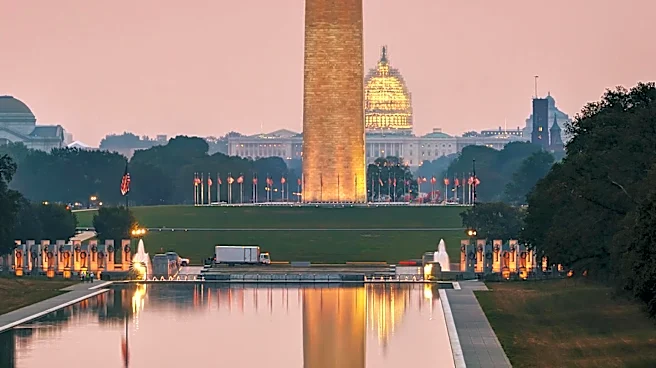
President Trump stated on Sunday that vandals are responsible for the extensive damage to the grass on the National Mall, specifically near the World War II Memorial. This area was the site of his July 4th celebration, where a large stage was erected
and crowds gathered. President Trump made this accusation via a social media post, including a photo of the patchy, brown turf, and suggested that the Reflecting Pool was also vandalized. He has previously blamed vandals for damage to renovation projects in the nation's capital, often without providing evidence and sometimes contradicting accounts from his own officials. Authorities recently arrested Melissa L. Farris in connection with vandalism at the World War II Memorial, but charging documents for that case do not mention the grassy area President Trump is now highlighting.
Why It's Important?
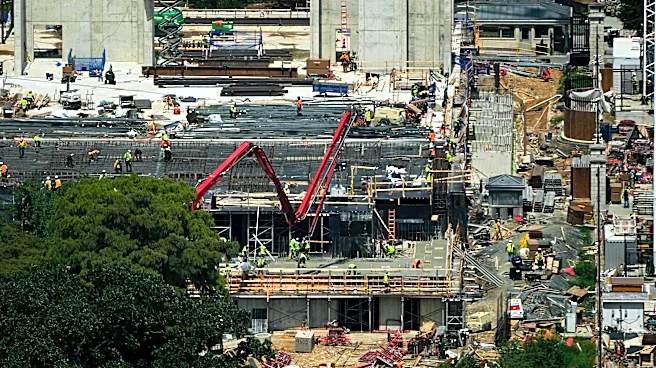
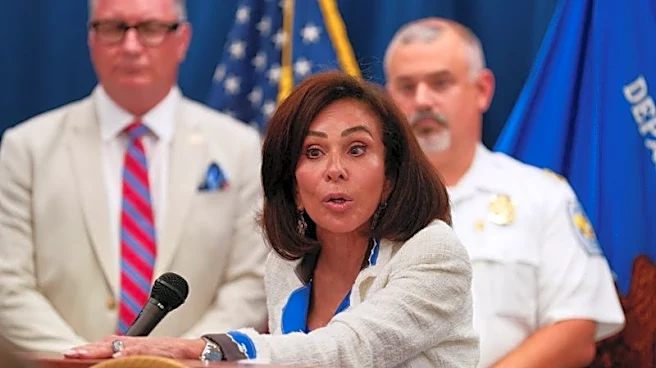
President Trump's repeated claims of vandalism, particularly in the absence of corroborating evidence or in contradiction to official reports, highlight a recurring pattern of his administration's approach to public perception and accountability. This incident on the National Mall, a prominent national landmark, draws attention to the broader issue of how public spaces are managed and maintained, especially after large-scale events. The discrepancy between President Trump's assertions and official findings, such as U.S. Attorney Jeanine Pirro's conclusion that damage to the Reflecting Pool was due to poor construction rather than vandalism, can erode public trust in official statements. Furthermore, the focus on alleged vandalism distracts from potential questions regarding the impact of large events on public property and the responsibility for any resulting damage, raising concerns about transparency and the allocation of resources for repairs.
What's Next?
The immediate next steps will likely involve further investigation into the actual cause of the grass damage on the National Mall. If official reports continue to contradict President Trump's claims of vandalism, it could lead to increased scrutiny of his administration's statements and potentially fuel further political debate. The ongoing repairs to the Reflecting Pool and the National Mall will continue, with public attention on the cost and timeline. This incident may also prompt discussions about the protocols for hosting large events on national landmarks and the measures in place to protect these historical sites. The broader implication is a continued challenge to the credibility of official narratives, which could influence public opinion and political discourse in the lead-up to future elections.
Beyond the Headlines
This incident touches upon a deeper societal issue concerning the politicization of public spaces and the narrative control surrounding their use and maintenance. President Trump's consistent attribution of damage to 'vandals' can be seen as an attempt to frame events in a way that aligns with a particular political agenda, potentially demonizing opposition or external factors rather than acknowledging internal issues or the natural consequences of large gatherings. This approach can contribute to a climate of distrust and polarization, where facts are contested and interpretations are heavily influenced by political affiliation. The National Mall, as a symbol of American democracy and public gathering, becomes a stage not just for events, but also for competing narratives about responsibility and truth, reflecting broader challenges in contemporary public discourse.