








What's Happening?
A recent report highlights the ongoing challenge of gender representation in advanced science subjects, particularly in the context of AI literacy. The report indicates that while girls are underrepresented in fields like physics and computer science,
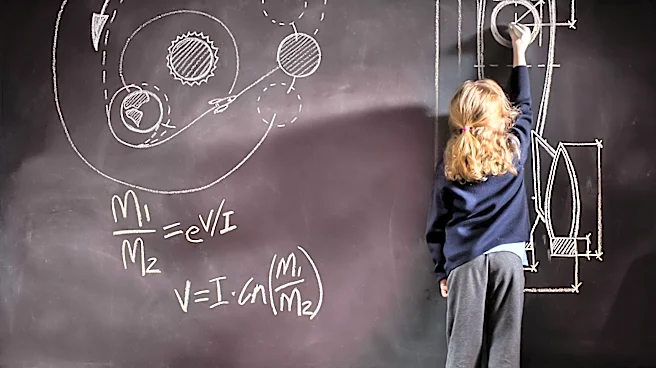
they make up nearly half of the students in advanced mathematics courses. This suggests that the issue may not be a lack of ability or interest, but rather how science and success are defined in the age of AI. The report emphasizes the importance of skills such as critical thinking, creativity, and complex problem-solving, which are essential for AI literacy and future scientific careers. The Davidson Institute of Science Education is actively integrating interdisciplinary learning and AI applications into its programs to attract more girls to science.
Why It's Important?
The underrepresentation of women in high-tech fields has significant economic implications, particularly in countries like Israel where technological advancement is crucial. Women account for a small percentage of development roles and leadership positions in startups, representing a loss of valuable human capital. Increasing women's participation in technological roles is not only beneficial for gender equality but also a strategic move to enhance the country's technological edge. The integration of AI literacy into education can help bridge this gap by equipping students with the necessary skills to thrive in a rapidly changing world. This shift in educational focus could lead to a more diverse and innovative workforce, ultimately benefiting the economy and society as a whole.
What's Next?
To address these challenges, educational institutions may need to rethink how they define and measure excellence in science. This could involve broadening the pathways to high-tech careers beyond traditional subjects like physics and computer science, and incorporating interdisciplinary approaches that emphasize creativity and problem-solving. Additionally, there may be increased efforts to create learning environments that combine science with meaningful work and societal contributions, which have been shown to attract more girls to the field. These changes could lead to a more inclusive and dynamic scientific community, better equipped to tackle the complex challenges of the future.
Beyond the Headlines
The discussion around AI literacy and gender representation in science also touches on broader societal issues, such as the need for educational systems to adapt to the changing demands of the workforce. As AI continues to transform industries, the ability to work collaboratively with intelligent systems and make data-informed decisions will become increasingly important. This shift may require a reevaluation of traditional educational models and a greater emphasis on lifelong learning and cognitive flexibility. By fostering these skills, educational institutions can help prepare students for a future where adaptability and interdisciplinary knowledge are key to success.