
What's Happening?
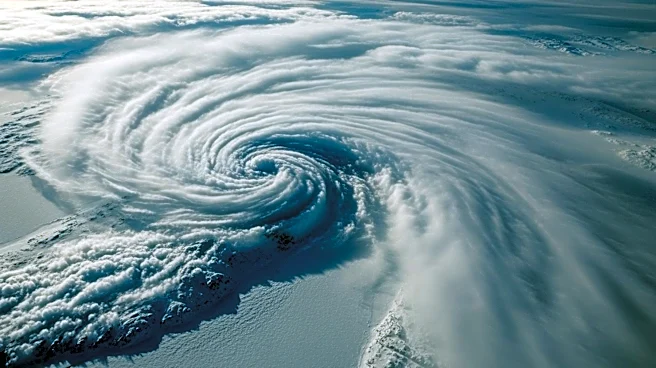
NASA's Earth Observatory has captured a striking image of a rare arctic storm over Alaska, marking the end of winter 2026 with dramatic weather conditions. On March 19, 2026, a NASA satellite documented
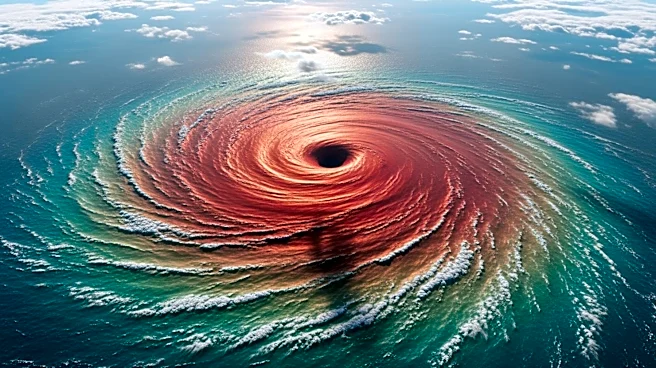
the atmospheric instability over southern Alaska, where colder-than-average temperatures and heavy snowfall were prevalent. The storm was characterized by 'cloud streets,' long parallel bands of clouds formed as cold, dry air from the Arctic moved over the warmer waters of the Gulf of Alaska. This phenomenon occurs when the air picks up heat and moisture from the ocean, creating clouds as warmer air rises and cooler air sinks. Additionally, the satellite captured von Kármán vortex streets near Unimak Island, a pattern of swirling clouds formed by strong winds interacting with elevated terrain. A significant feature of the storm was a polar low, a compact storm system with tropical storm-force winds, located southwest of Anchorage. This system brought snow and thunderstorms, contributing to the cold and stormy weather that persisted throughout March.
Why It's Important?
The capture of this rare arctic storm by NASA highlights the ongoing challenges posed by extreme weather patterns, which are becoming more frequent due to climate change. Such storms can have significant impacts on local communities, infrastructure, and ecosystems. The ability to monitor and understand these weather patterns is crucial for improving predictive models and preparing for future climate-related events. The data collected by NASA's satellite provides valuable insights into the dynamics of arctic storms and their potential effects on global weather systems. This information is essential for policymakers, scientists, and emergency management agencies as they develop strategies to mitigate the impacts of climate change and enhance resilience against extreme weather events.
What's Next?
As the climate continues to change, the frequency and intensity of arctic storms are expected to increase, posing new challenges for weather forecasting and disaster preparedness. Researchers will likely focus on improving climate models to better predict such events and their potential impacts. Additionally, there may be increased collaboration between government agencies, scientists, and local communities to develop adaptive strategies and infrastructure improvements to withstand extreme weather conditions. Continued monitoring by NASA and other organizations will be vital in tracking these changes and informing policy decisions aimed at reducing the risks associated with climate change.