








What's Happening?
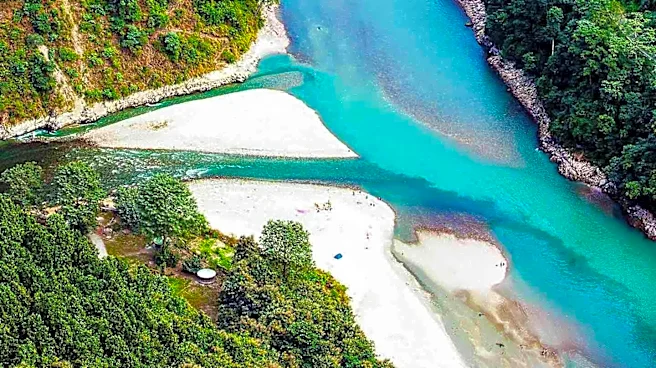
Bangladesh and India are facing renewed calls to finalize a water-sharing agreement over the Teesta River. The river is vital for agriculture and livelihoods in Bangladesh's northern districts, but its flow is heavily dependent on upstream water management
in India. Recent discussions have involved China, which has offered to support Bangladesh in managing the river's infrastructure. However, the core issue remains the need for a formal agreement with India to ensure adequate water flow during the dry season.
Why It's Important?
The Teesta River is crucial for Bangladesh's agriculture, and any disruption in its flow can have severe economic and social impacts. A water-sharing agreement with India would provide a more predictable and equitable distribution of water resources, benefiting both countries. The involvement of China adds a geopolitical dimension to the issue, as it reflects Bangladesh's efforts to seek alternative solutions amid stalled negotiations with India.
What's Next?
Bangladesh and India are expected to continue negotiations to reach a water-sharing agreement. The outcome will depend on both countries' willingness to address each other's concerns and find a mutually beneficial solution. The involvement of China may also influence the dynamics of these discussions, as Bangladesh seeks to balance its relationships with both neighboring countries.