





What's Happening?
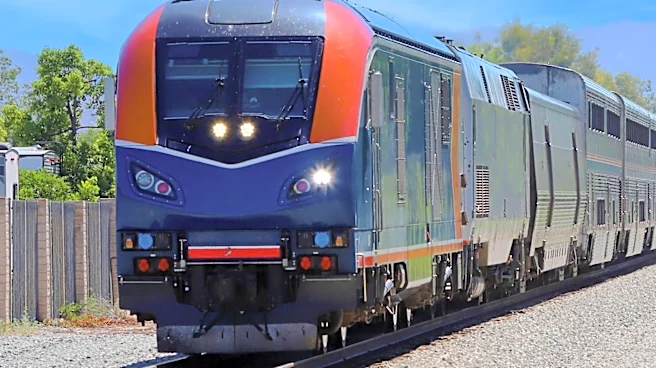
Amtrak is preparing to introduce 83 new Airo trainsets, with the first eight scheduled to debut this fall on the Pacific Northwest’s Cascades route. This $8 billion investment aims to refresh Amtrak's aging fleet, some of which date back to the 1970s.
The new trains will eventually serve over a dozen routes across New England, Pennsylvania, and the mid-Atlantic region. The Airo trainsets are designed to reduce trip times, though specific figures have not been released, and can reach speeds of up to 125 mph. The Cascades trains will also increase passenger capacity to 317 and are expected to improve reliability and comfort. These trains feature electric and diesel propulsion, allowing them to operate on both electrified and conventional tracks. The Airo locomotives meet the Environmental Protection Agency’s Tier 4 emissions standards, significantly reducing particulate matter and nitrogen oxide emissions. This rollout follows a historic $66 billion investment in passenger and freight rail by the Biden administration through the Infrastructure Investment and Jobs Act.
Why It's Important?
This significant investment in new Amtrak trainsets holds substantial importance for U.S. transportation infrastructure and environmental goals. By replacing older equipment, Amtrak aims to enhance the efficiency, reliability, and comfort of passenger rail services, potentially attracting more riders and alleviating congestion on roads and in air travel. The dual-propulsion capability of the Airo trains is particularly crucial for the U.S. rail network, much of which remains unelectrified, allowing for immediate environmental benefits through cleaner diesel engines while also being compatible with future electrification efforts. Meeting EPA Tier 4 emissions standards represents a tangible step towards reducing the carbon footprint of transportation, aligning with broader national environmental objectives. This modernization effort could also stimulate economic activity through manufacturing and maintenance jobs, as the trains are built in the U.S. by Siemens. The initiative underscores a commitment to improving public transit options and promoting more sustainable travel alternatives across the country.
What's Next?
The initial deployment of Airo trainsets on the Cascades route this fall will serve as a crucial test phase, providing real-world data on their performance, reliability, and passenger reception. Following this, Amtrak will progressively roll out the remaining 75 trainsets across various routes, with riders on the Northeast Regional route expected to see them by 2027. This phased introduction will allow Amtrak to manage the transition and address any operational challenges. The new trains' ability to seamlessly switch between diesel and electric power will particularly benefit routes like the Northeast Regional, where current operations involve time-consuming locomotive swaps in Washington, D.C. This efficiency gain is expected to improve travel times and overall service quality. Continued federal funding and policy support will be critical for the sustained success and expansion of these modernization efforts, especially given past proposals for cuts to passenger rail funding.
Beyond the Headlines
Beyond the immediate benefits of faster, cleaner, and more comfortable travel, the introduction of the Airo trainsets could catalyze a broader shift in American transportation culture. By offering a more appealing alternative to driving and flying, Amtrak could contribute to reducing individual car dependency and its associated environmental and infrastructural burdens. The emphasis on meeting stringent environmental standards also sets a precedent for other transportation sectors to adopt cleaner technologies. This initiative reflects a growing recognition of rail's potential as a sustainable and efficient mode of transport, especially in densely populated corridors. The long-term success of this investment could influence future policy decisions regarding high-speed rail development and the expansion of electrified rail networks, potentially reshaping the landscape of intercity travel in the U.S. for decades to come.