




What's Happening?
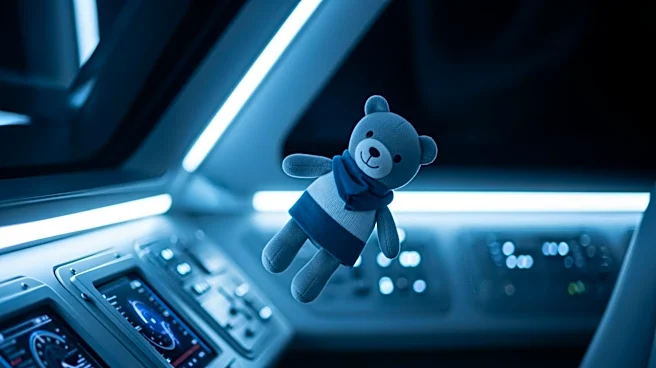
NASA and SpaceX have been incorporating plush toys as zero gravity indicators in their space missions. These toys, such as Baby Yoda, Snoopy, and Shaun the Sheep, are placed inside spacecraft cabins to provide astronauts with a visual cue when the spacecraft enters
microgravity. This tradition dates back to early space missions and continues to be a practical and consistent element in space exploration. The toys begin to float once the spacecraft leaves Earth's gravitational pull, offering an immediate visual confirmation of the change in environment. For instance, Baby Yoda was used in a SpaceX mission to the International Space Station, while Snoopy has been associated with NASA since the 1960s, participating in lunar exploration missions like Apollo 10. Shaun the Sheep was part of the uncrewed Artemis I mission, and Tremor the Dinosaur was used in a SpaceX Crew Dragon demonstration mission.
Why It's Important?
The use of plush toys as zero gravity indicators is significant for several reasons. Firstly, it provides a simple and effective way for astronauts to confirm the transition into microgravity without relying solely on technological instruments. This practice enhances safety and situational awareness during critical phases of space missions. Additionally, the inclusion of recognizable characters like Baby Yoda and Snoopy helps engage the public and generate interest in space exploration. These mascots serve as a bridge between complex scientific endeavors and the general public, making space missions more relatable and accessible. Furthermore, the tradition of using plush toys underscores the importance of maintaining consistency and continuity in space exploration practices, which can contribute to the success and safety of future missions.
What's Next?
As space exploration continues to evolve, the use of plush toys as zero gravity indicators is likely to persist. Future missions, including those under NASA's Artemis program and SpaceX's commercial flights, may continue to incorporate these mascots to maintain tradition and public engagement. The selection of new mascots could involve public participation or educational initiatives, further strengthening the connection between space agencies and the public. Additionally, as private companies and international partners become more involved in space exploration, the practice of using plush toys may expand, fostering a sense of unity and shared purpose across different missions and organizations.
Beyond the Headlines
The use of plush toys in space missions highlights the cultural and psychological aspects of space travel. These mascots not only serve a functional role but also provide comfort and a sense of familiarity to astronauts in the isolated and challenging environment of space. The tradition reflects the human need for connection and continuity, even in the most advanced technological settings. Moreover, the choice of mascots often reflects popular culture and societal trends, offering insights into the values and interests of the time. As space exploration becomes more inclusive and diverse, the selection of mascots may also evolve to represent a broader range of cultures and perspectives.