






What's Happening?
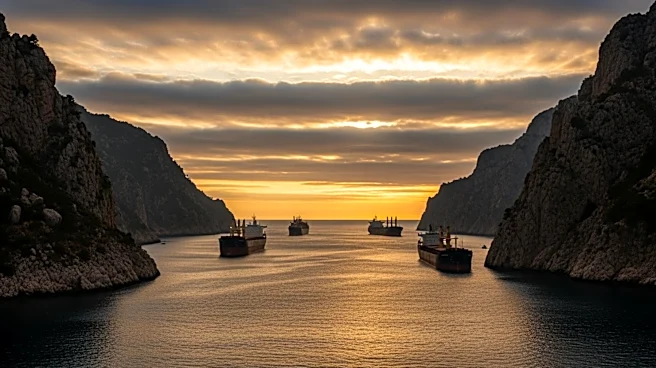
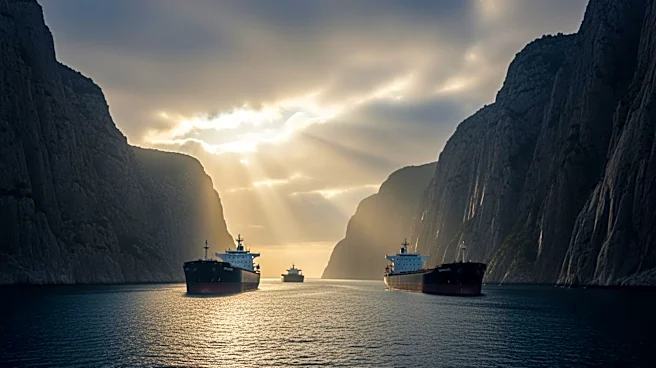
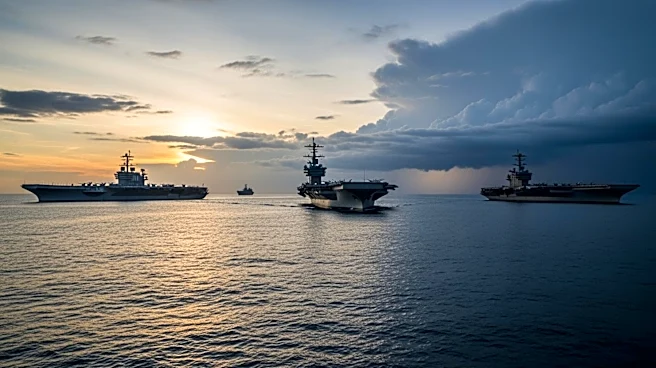
The USS George H.W. Bush, a third U.S. aircraft carrier, has arrived in waters near Iran, significantly increasing the military presence in the region. This deployment comes as President Trump pressures Iran to abandon its nuclear program and reopen the Strait
of Hormuz. The carrier group, which includes thousands of personnel and advanced fighter jets, joins two other carriers already in the area. The U.S. is enforcing a blockade of Iranian ports, aiming to economically pressure Tehran. The situation remains tense as peace negotiations between the U.S. and Iran continue.
Why It's Important?
The arrival of the USS George H.W. Bush underscores the escalating military tension between the U.S. and Iran. This deployment enhances the U.S.'s strategic capabilities in the region, potentially influencing the outcome of ongoing negotiations. The increased military presence serves as a deterrent to Iran and signals the U.S.'s commitment to its demands. The situation has significant implications for regional stability, global oil markets, and international diplomatic relations, as any escalation could disrupt global trade and security.
What's Next?
The U.S. military is prepared to resume strikes if ordered, and the situation remains fluid as negotiations continue. The presence of three aircraft carriers in the region may pressure Iran to comply with U.S. demands, but it also risks provoking further conflict. The international community will be closely monitoring developments, as any military action could have widespread repercussions. The U.S. and its allies must navigate this delicate situation to avoid escalation while achieving their strategic objectives.