







What's Happening?
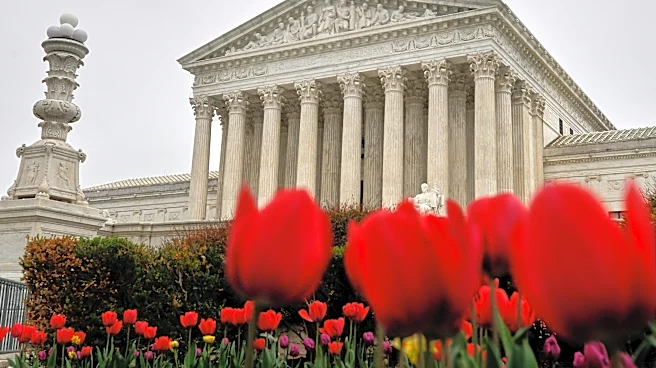
The U.S. Supreme Court has agreed to expedite its mandate in a Louisiana redistricting case, allowing the state to potentially redraw its congressional maps ahead of the midterm elections. This decision follows a ruling that Louisiana's current map violated
the constitution. The court's order, which was unsigned, came just five days after the initial decision. Justices Samuel Alito, Clarence Thomas, and Neil Gorsuch concurred, while Justice Ketanji Brown Jackson dissented, citing chaos in voting rights cases. The expedited mandate was requested by a group of Louisiana voters who argued that delays could jeopardize the implementation of a new map.
Why It's Important?
The Supreme Court's decision to expedite the redistricting mandate is pivotal in the context of voting rights and electoral fairness. By fast-tracking the process, the court is addressing concerns about potential racial discrimination in electoral maps, which could impact the representation of minority communities. This move is likely to influence redistricting efforts nationwide, as states navigate the legal landscape shaped by the Voting Rights Act. The decision underscores the court's role in shaping electoral processes and highlights ongoing tensions in voting rights litigation.
What's Next?
Following the Supreme Court's decision, Louisiana is expected to submit a new congressional map plan within a short timeframe. The state's primary elections, initially scheduled for mid-May, have been suspended by Governor Jeff Landry to accommodate the redistricting process. This development may lead to further legal challenges, as stakeholders contest the new map and its implications for electoral representation. The outcome of this case could set precedents for other states facing similar redistricting challenges, potentially affecting the balance of political power in Congress.