









What's Happening?
President Donald Trump has announced the nomination of Lance Schroyer, a former Oklahoma state trooper and Marine, to lead the Immigration and Customs Enforcement (ICE). This decision follows an internal debate within the Department of Homeland Security
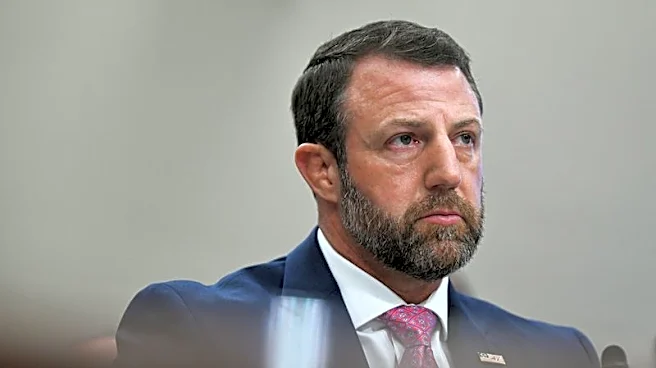
(DHS), led by Secretary Markwayne Mullin. Schroyer, who currently serves as a senior adviser to Mullin, was not the initial choice for the position. Mullin's first candidate, Tulsa County Sheriff Vic Regalado, withdrew from consideration after failing to gain White House support. Schroyer's nomination comes as the Trump administration seeks to intensify immigration enforcement, including increasing arrests and expanding detention facilities. The nomination has sparked discussions about Schroyer's suitability, given his limited experience in immigration enforcement, and the agency's aggressive tactics, which have been criticized by both Democrats and some Republicans.
Why It's Important?
The nomination of Lance Schroyer to lead ICE is significant as it underscores the Trump administration's commitment to its immigration crackdown agenda. Schroyer's leadership will be pivotal in executing President Trump's policies aimed at mass deportations and securing the U.S. borders. This move could impact U.S. immigration policy and enforcement practices, potentially leading to increased deportations and expanded detention facilities. The decision also highlights internal dynamics within the DHS and the influence of key figures like Stephen Miller, who is known for his hardline stance on immigration. The nomination may face scrutiny from lawmakers concerned about Schroyer's experience and the agency's controversial enforcement methods.
What's Next?
If confirmed, Schroyer will take over from acting ICE Director David Venturella. The confirmation process may involve rigorous questioning from lawmakers about Schroyer's qualifications and the agency's enforcement strategies. The Trump administration will likely continue to face pressure to demonstrate results from its immigration policies. The nomination could also lead to further debates on immigration policy within Congress, potentially affecting future legislative actions. Stakeholders, including immigration advocacy groups and political leaders, may respond to the nomination with varying degrees of support or opposition, influencing public discourse on immigration enforcement.