





What's Happening?
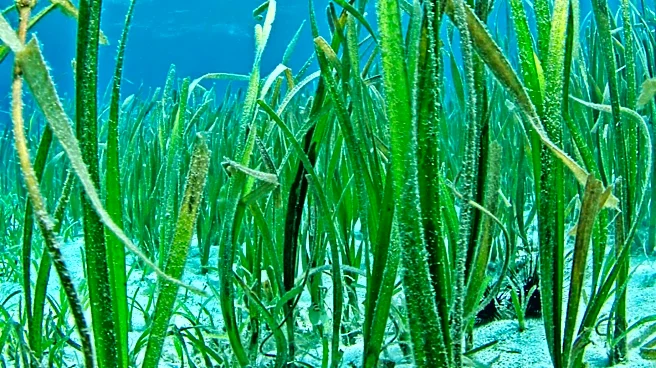
In Casco Bay, Maine, a team of researchers is actively working to preserve and restore seagrass meadows, which are crucial for marine biodiversity. These meadows, primarily composed of the eelgrass species Zostera marina, serve as vital nurseries for young
marine life and play a significant role in improving water quality and storing carbon. However, these ecosystems have been declining due to factors such as rising temperatures, coastal development, and nutrient pollution. The Collaborative for Bioregional Action Learning and Transformation (COBALT) is leading efforts to study eelgrass reproduction and develop methods for harvesting, storing, and transplanting seeds. This initiative is part of a broader conservation network aiming to restore seagrass in areas where it has been lost.
Why It's Important?
The decline of seagrass meadows in Maine poses a threat to marine biodiversity and the health of coastal ecosystems. These meadows are essential for the survival of many marine species and help mitigate the effects of climate change by storing carbon and reducing coastal erosion. The loss of seagrass could have significant economic impacts on local communities that rely on marine resources. By understanding and addressing the causes of seagrass decline, researchers hope to restore these vital ecosystems, which could lead to improved marine biodiversity and resilience against climate change.
What's Next?
Researchers are continuing to map and study seagrass meadows along the Maine coast to better understand the extent of the decline and identify effective restoration strategies. Efforts include collecting seeds from healthy 'mother meadows' and testing methods for transplanting them to degraded areas. Collaboration with local communities, including the Passamaquoddy Nation, is also underway to incorporate traditional ecological knowledge into restoration efforts. The success of these initiatives could serve as a model for similar conservation efforts globally.
Beyond the Headlines
The restoration of seagrass meadows in Maine highlights the interconnectedness of environmental health and cultural heritage. The involvement of indigenous communities in the restoration process underscores the importance of integrating traditional knowledge with scientific research. This approach not only enhances the effectiveness of conservation efforts but also fosters a deeper understanding of the cultural significance of these ecosystems. As climate change continues to impact coastal regions, the lessons learned from Maine's seagrass restoration could inform broader environmental policies and practices.