




What's Happening?
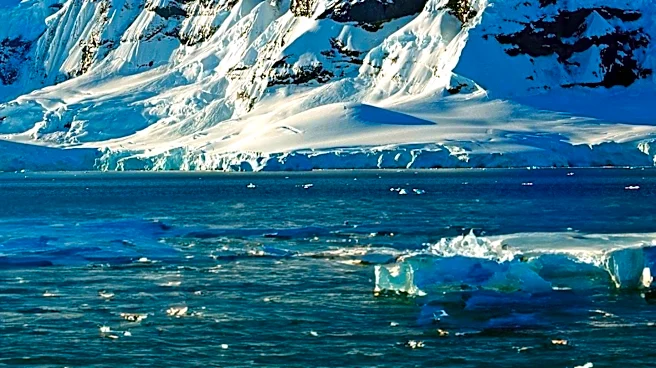
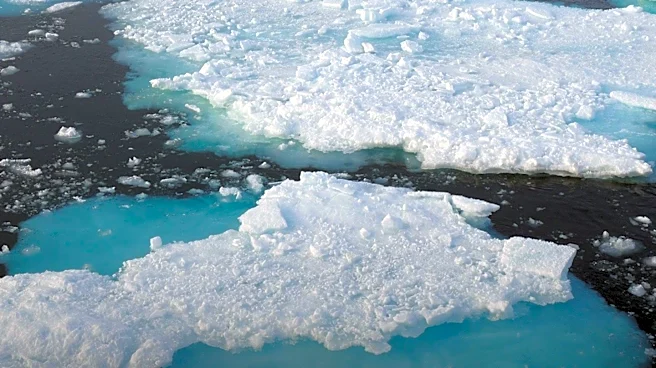
Earth has lost more than 12 trillion tons (11.3 trillion metric tons) of ice from Greenland and Antarctica since 1979, according to a major scientific report published in the journal Scientific Data. This massive ice melt has contributed to a global sea
level rise of approximately one inch (3.1 centimeters) since 1979, in addition to other climate factors. The study, an international collaboration of polar scientists led by the European Space Agency, incorporated NASA satellite data to chart ice sheet volumes in Antarctica back to 1979 and in Greenland back to 1972. The report indicates that five-sixths of this melt is not due to hotter air, but rather warmer waters eroding the ice sheets from below and the sides, with glaciers flowing into the oceans. The melting has been accelerating, particularly in the 2010s, following a period of relative stability in the 1970s, 1980s, and early 1990s.
Why It's Important?
The accelerating loss of ice from Greenland and Antarctica has profound implications for coastal regions worldwide, including the United States. For every third of an inch of sea level rise, an additional 2 to 3 million people are exposed to flooding at least once a year. This increased flooding risk threatens coastal communities, infrastructure, and ecosystems, potentially leading to displacement, economic disruption, and significant costs for adaptation and protection measures. The study highlights that the changes are tracking decades behind global warming, meaning the melting will continue for many more decades even if global warming is halted. This long-term commitment to sea level rise necessitates urgent planning and investment in coastal resilience and mitigation strategies across the U.S.
What's Next?
Scientists anticipate that the accelerating trend of ice loss will continue, despite a brief pause between 2020 and 2023 attributed to short-term weather variations. The study's authors emphasize that the long-term rise is clearly linked to climate change, and the threat is undeniable. The focus will remain on monitoring these dynamic processes, which are more abrupt and active than slow, steady melting, and are prone to triggering runaway 'tipping points.' This ongoing research will inform climate models and policy decisions regarding greenhouse gas emissions and adaptation strategies. Coastal cities and states in the U.S. will need to continue developing and implementing plans for sea level rise, including infrastructure upgrades, land-use planning, and community relocation efforts.
Beyond the Headlines
The findings underscore the critical need for global action on climate change and highlight the long-term consequences of past emissions. The melting of polar ice sheets represents a significant feedback loop in the climate system, as warmer oceans further accelerate ice loss, contributing to a cycle of environmental degradation. This situation raises ethical questions about intergenerational equity and the responsibility of current generations to mitigate future risks. It also challenges societies to reconsider their relationship with the environment and transition towards more sustainable practices. The potential for 'tipping points' in ice sheet stability suggests that some changes may become irreversible, emphasizing the urgency of comprehensive climate policies and international cooperation.