






What's Happening?
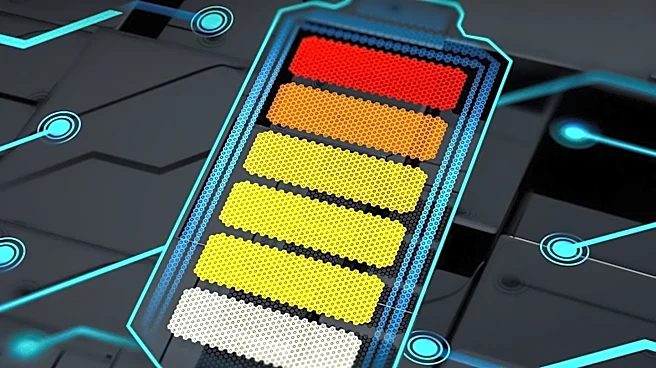
The administration of President Trump is significantly investing in battery technology, allocating billions of dollars despite President Trump's long-standing skepticism towards electric vehicles (EVs) and other clean energy initiatives like wind power.
This shift in focus stems from a growing recognition of batteries' importance across various sectors, including automation, robotics, data centers for artificial intelligence, and military drones. The administration has been particularly concerned about China's dominance in global lithium-ion battery supply chains and aims to bolster domestic production of battery components and critical minerals. While initially freezing some Biden-era grants for battery manufacturing, the Energy Department has since allowed many to proceed and has invested in companies developing battery components and critical minerals. This includes a $1.4 billion loan from the Pentagon's Office of Strategic Capital to Sila Nanotechnologies, a company developing silicon-based lithium-ion batteries.
Why It's Important?
This strategic pivot by the Trump administration is crucial for U.S. national security and economic independence. China's near-monopoly on battery production and critical mineral processing presents a significant vulnerability, especially given the increasing military and technological applications of batteries. By investing in domestic battery manufacturing and critical mineral extraction, the U.S. aims to reduce its reliance on foreign adversaries and secure essential components for its defense and technological advancements. This move also highlights a bipartisan consensus on the strategic importance of batteries, even if the motivations differ (climate change for the previous administration versus national security and technological leadership for the current one). However, experts note that without a robust domestic EV market, which is the largest consumer of lithium-ion batteries, fully onshoring the battery supply chain will be challenging, as the defense sector alone may not provide sufficient demand.
What's Next?
The Trump administration is expected to continue its aggressive push to fund domestic battery production and critical mineral mining. This will likely involve further grants, loans, and policy incentives aimed at accelerating the development of a self-sufficient U.S. battery supply chain. The focus will remain on reducing dependence on China, potentially leading to increased trade tensions or new tariffs on imported battery components. However, the long-term success of these initiatives will depend on addressing the demand side, particularly for EVs. Without a strong domestic market for electric vehicles, the scale needed to compete with global giants like China might be difficult to achieve. This could lead to ongoing debates in Congress regarding tax credits and other incentives for EV adoption, potentially creating friction between the administration's industrial policy and its stance on clean energy.
Beyond the Headlines
The administration's investment in battery technology, despite its stance on EVs, reveals a complex interplay of national security, economic competition, and technological advancement. This approach underscores a recognition that batteries are not solely a 'green' technology but a foundational element for a wide array of strategic applications, from military hardware to artificial intelligence infrastructure. The emphasis on domestic mining and processing of critical minerals also raises deeper questions about environmental regulations and the balance between industrial growth and ecological preservation within the U.S. The ethical implications of securing these resources, both domestically and internationally, will likely become a more prominent discussion point, particularly as the U.S. seeks to establish its own supply chains independent of existing global networks dominated by other nations.