
What's Happening?
Researchers at the Jefferson Weinberg ALS Center in Pennsylvania are exploring the use of CAR T-cell therapy to slow the progression of amyotrophic lateral sclerosis (ALS), a neurodegenerative condition.
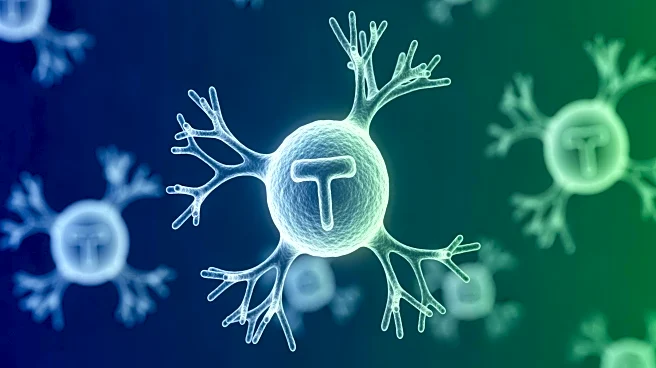
ALS, also known as Lou Gehrig's disease, is characterized by the loss of motor neurons, leading to muscle control issues. The life expectancy for ALS patients is typically two to five years. The research focuses on genetically engineered immune cells, known as CAR-T cells, which target and eliminate rogue immune cells in the brain that contribute to neuron death. These rogue cells, called microglia, become overactive and damage neurons by removing too many synapses. The team has identified a protein, uPAR, on the surface of these microglia, allowing CAR-T cells to target and remove them. While this approach does not cure ALS, it aims to slow its progression significantly.
Why It's Important?
The potential of CAR T-cell therapy to slow ALS progression is significant due to the limited treatment options currently available for the disease. ALS affects a small percentage of the population, but its impact is profound, with most patients experiencing rapid decline. Slowing the disease could improve quality of life and extend survival for those affected. Additionally, the research could have broader implications for other neurodegenerative diseases, such as certain types of dementia, where similar immune dysfunctions are observed. The development of effective treatments for ALS could also pave the way for advancements in treating other conditions with similar underlying mechanisms.
What's Next?
The research team is conducting trials in mice with a genetic mutation that causes ALS, with results expected within a year. If successful, these findings could expedite human trials, given the severity of ALS and the lack of effective treatments. Regulatory bodies may prioritize these trials to bring potential therapies to patients sooner. The research also highlights the need for further exploration of CAR T-cell therapy's applications in other neurodegenerative diseases, potentially leading to a new class of treatments for conditions currently lacking effective interventions.
Beyond the Headlines
While promising, CAR T-cell therapy faces challenges, including potential side effects and high costs due to the personalized nature of the treatment. Efforts are underway to make the therapy safer and more affordable, such as developing methods to generate CAR-T cells within the body. The success of this research could lead to a paradigm shift in how neurodegenerative diseases are treated, emphasizing the role of immune system modulation in managing these conditions.