






What's Happening?
Lina Adhikari, a Member of Parliament from Nepal's Rastriya Swatantra Party (RSP) and the party's central treasurer, has outlined the government's economic priorities and plans. Adhikari, who also serves on the Finance Committee under the House of Representatives,
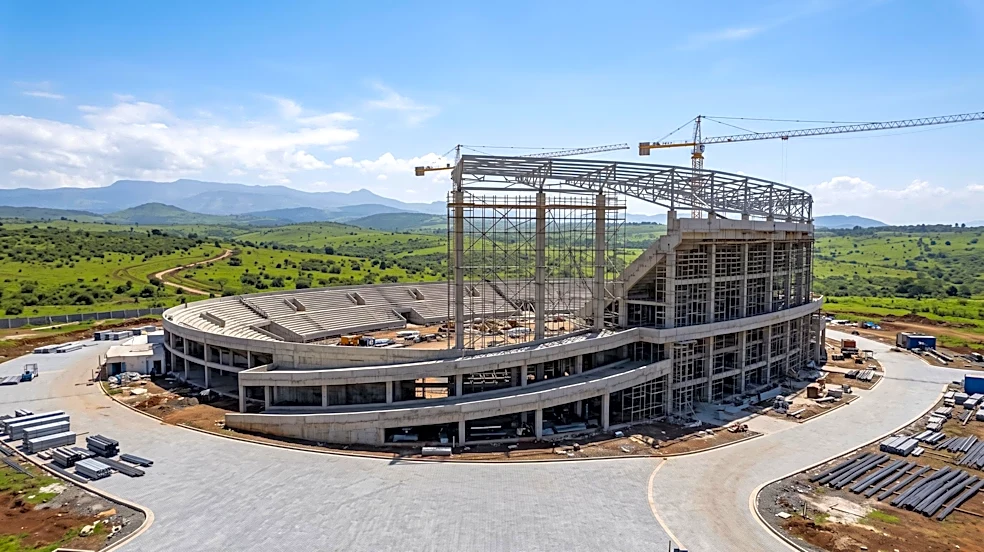
discussed the government's commitment to boosting the domestic economy and addressing the concerns of the private sector. She highlighted the introduction of a private sector-friendly budget and the Prime Minister's active involvement in discussions with various private sector organizations to understand why the economy has not become more dynamic despite significant liquidity in banks. Adhikari also mentioned the government's goal to achieve a $100 billion economy within 5 to 7 years and raise per capita income to $3,000 USD, emphasizing infrastructure development and resource mobilization. The government is also focused on expanding large roads, highways, and improving connectivity at important border crossings.
Why It's Important?
This initiative is important for Nepal's economic stability and growth, aiming to create a more dynamic and prosperous environment. The focus on a private sector-friendly budget and active engagement with businesses signals a commitment to fostering economic development and job creation. By targeting a $100 billion economy and a $3,000 USD per capita income, the government is setting ambitious goals that, if achieved, could significantly improve the living standards of Nepalis. The emphasis on infrastructure development, including roads, highways, and border connectivity, is crucial for facilitating trade, investment, and overall economic activity. Addressing the exodus of Nepalis for foreign employment by creating more opportunities within the country is a key aspect of these plans, aiming to retain talent and boost local entrepreneurship. The government's serious approach to law-making and policy changes, with 166 bills tabled this fiscal year, indicates a proactive stance towards removing legislative hurdles that might impede economic progress.
What's Next?
The government plans to continue its serious work on boosting the morale of the private sector and implementing its economic agenda. This includes further discussions with private sector organizations and individuals to ensure their concerns are addressed. The focus will remain on developing infrastructure, mobilizing internal and external resources, and expanding a production-oriented economy to create employment opportunities within Nepal. The government is also committed to simplifying the law-making process, with 166 bills slated for parliamentary consideration this fiscal year, to facilitate quicker implementation of policies. These legislative efforts are expected to bring about necessary changes to support economic growth and address challenges such as the exodus of youth seeking foreign employment. The government aims to ensure that citizens feel the presence and effectiveness of their government in addressing their expectations and problems.
Beyond the Headlines
The government's economic strategy reflects a broader shift towards a more self-reliant and production-oriented economy, aiming to reduce dependence on foreign employment and foster domestic entrepreneurship. The emphasis on infrastructure development and connectivity suggests a long-term vision for regional integration and trade facilitation, which could have significant geopolitical implications in South Asia. The active involvement of the Prime Minister and the focus on private sector engagement highlight a recognition of the critical role businesses play in economic growth and job creation. This approach could lead to a more resilient economy, less susceptible to external shocks. Furthermore, the commitment to addressing the 'Gen Z movement' and the high expectations of the public underscores the government's awareness of social pressures and the need to deliver tangible results to its younger population, potentially shaping future political landscapes and social stability.