




What's Happening?
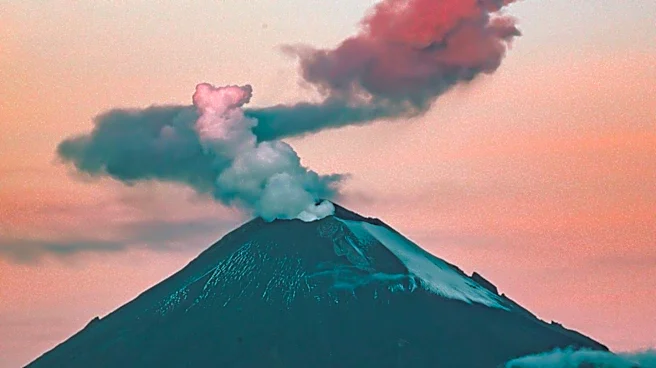
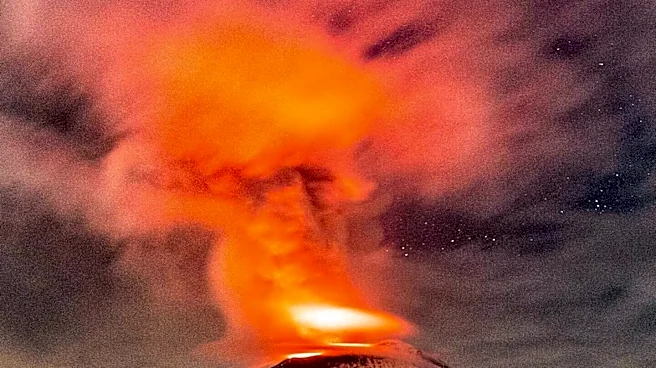
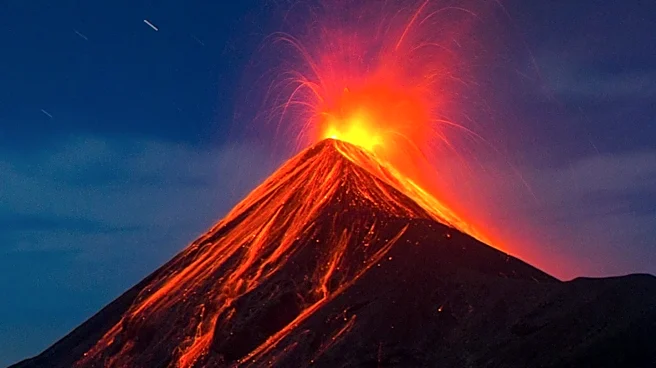
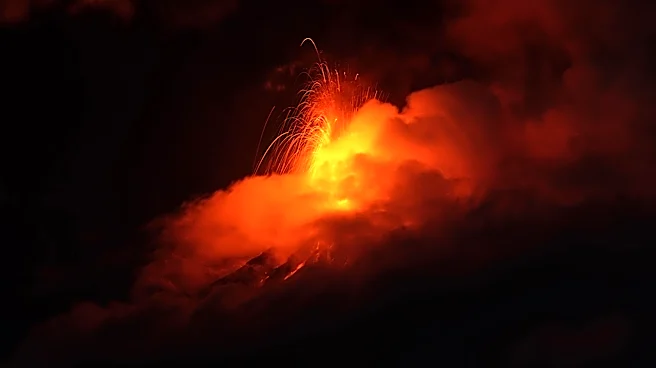
A significant eruption of Guatemala's Fuego Volcano has led to the evacuation of at least 1,700 residents from nearby areas. The volcano, known for being the most active in Central America, began its eruptive phase on Monday morning, intensifying overnight
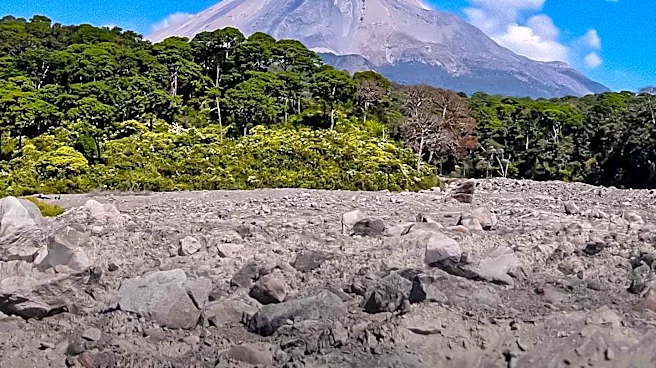
with lava flows and large columns of gas and ash. The National Coordinator for Disaster Reduction (Conred) has declared a red alert in the departments of Sacatepéquez, Chimaltenango, and Escuintla, affecting 1.6 million people. The eruption has resulted in mudflows, incandescent rocks, and ashfall, prompting authorities to urge residents to wear masks and protect their water and food supplies. Despite the heightened alert, operations at Guatemala City's international airport remain unaffected.
Why It's Important?
The eruption of Fuego Volcano underscores the ongoing risk posed by volcanic activity in Guatemala, a country situated along the Pacific Ring of Fire. The evacuation of 1,700 residents highlights the immediate threat to human safety and the potential for significant disruption to daily life and local economies. The red alert status in key departments indicates a high level of danger, necessitating swift action to protect lives and property. The eruption also serves as a reminder of the need for robust disaster preparedness and response strategies in regions prone to natural disasters. The impact on tourism, particularly in areas like Antigua, a UNESCO World Heritage Site, could have economic repercussions.
What's Next?
Authorities will continue to monitor the situation closely, with the potential for further evacuations if volcanic activity persists or intensifies. The Ministry of Education has already suspended in-person classes in affected areas, and additional measures may be implemented to ensure public safety. The response from local and international aid organizations could play a crucial role in providing relief and support to displaced residents. Long-term, the government may need to reassess and strengthen its disaster management policies to better handle future eruptions and mitigate their impact on communities.