



What's Happening?
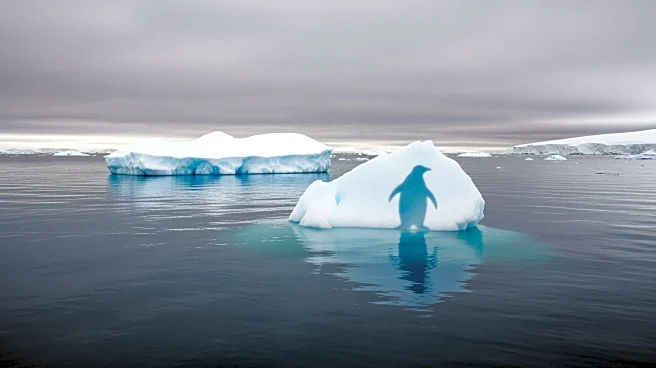
In Antarctica, the Southern Ocean, known for its tumultuous waves, is home to diverse wildlife including orcas, seals, and penguins. Tourists visiting the Lemaire Channel, also called the 'Kodak Gap' for its picturesque scenery, witness the effects of
climate change firsthand. The Antarctic Peninsula is one of the fastest warming regions globally, with the surrounding ocean acting as a significant carbon dioxide repository. Gentoo penguins are adapting by migrating south, while Adelie penguins face potential threats due to their reliance on ice. The melting of Antarctic ice, averaging 149 billion metric tons annually from 2002 to 2020, underscores the environmental changes occurring in the region.
Why It's Important?
The warming of the Antarctic Peninsula highlights the broader impacts of climate change, affecting both local ecosystems and global environmental conditions. The region's ability to store carbon dioxide is crucial in mitigating climate change, but the ongoing ice melt threatens this balance. The adaptation of Gentoo penguins and the struggles of Adelie penguins illustrate the varied responses of species to environmental changes, potentially leading to shifts in biodiversity. These changes could have cascading effects on global sea levels and weather patterns, emphasizing the need for international climate action.
What's Next?
As climate change continues to impact Antarctica, further research and monitoring are essential to understand the long-term effects on wildlife and ice melt. International efforts to reduce carbon emissions and protect vulnerable ecosystems will be critical in mitigating these impacts. The situation in Antarctica serves as a stark reminder of the urgent need for global cooperation in addressing climate change.
Beyond the Headlines
The changes in Antarctica also raise ethical questions about human responsibility in preserving natural habitats. The potential loss of species like the Adelie penguin could have cultural and ecological implications, highlighting the interconnectedness of global ecosystems. The region's transformation may also influence future tourism and scientific research, as access and conditions evolve.