





What's Happening?
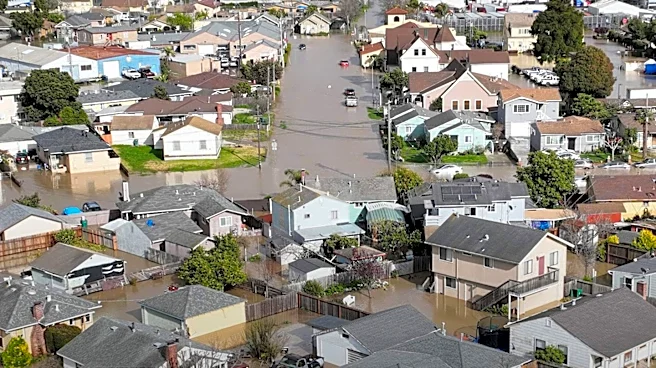
The National Weather Service (NWS) has issued an updated flood advisory for several Northern California counties, including Alameda, Contra Costa, San Francisco, San Mateo, and Santa Clara. The advisory, released on Friday at 2:42 p.m., is in effect until
5 p.m., warning of flooding caused by excessive rainfall. The NWS San Francisco CA reports minor flooding in low-lying and poor drainage areas, water over roadways, overflowing poor drainage areas, and ponding of water in urban or other areas. Residents are strongly advised to 'Turn around, don’t drown' when encountering flooded roads, as most flood deaths occur in vehicles. The NWS also provides guidance on flood safety, including seeking higher ground, adhering to evacuation orders, disconnecting utilities, and avoiding walking or driving through floodwaters.
Why It's Important?
This flood advisory is significant for the heavily populated Northern California region, impacting daily commutes, local businesses, and public safety. The warning about minor flooding and water over roadways indicates potential disruptions to transportation and commerce. The emphasis on not driving through floodwaters is a critical safety message, as even shallow water can be dangerous. For residents, this means a need for heightened awareness and preparedness, including knowing where to obtain sandbags and understanding evacuation procedures. The recurring nature of such advisories in California underscores the ongoing challenges posed by substantial rainfall and the need for robust urban planning and infrastructure to manage water runoff effectively. The economic impact could include temporary business closures and increased costs for emergency services and road maintenance.
What's Next?
The flood advisory for the affected Northern California counties is scheduled to expire at 5 p.m. on Friday. Residents should continue to monitor local weather updates and follow safety guidelines from the NWS. Local authorities will likely assess any immediate impacts on infrastructure and traffic flow. In the short term, clean-up efforts may be required in areas experiencing ponding or minor flooding. Looking ahead, the NWS provides resources for flood preparedness, including instructions on using sandbags and locations for obtaining them in various counties. This ongoing need for preparedness highlights the importance of community resilience and proactive measures to mitigate the effects of future rainfall events.
Beyond the Headlines
The frequent flood advisories in Northern California, particularly in its urban centers, point to a broader issue of urban hydrology and climate resilience. The NWS's detailed guidance on flood safety, including specific advice on driving and walking through floodwaters, reflects a persistent public safety challenge. The mention of sandbag distribution centers highlights a community-level response mechanism, but also suggests that existing drainage systems may be overwhelmed by 'excessive rainfall.' This situation raises questions about the adequacy of current urban infrastructure to handle increasingly intense weather patterns. Long-term implications could include increased investment in stormwater management, green infrastructure solutions, and updated building codes to protect properties from water intrusion. The repeated advisories serve as a continuous reminder for both individuals and municipalities to adapt to changing environmental conditions and enhance their preparedness strategies.