






What's Happening?
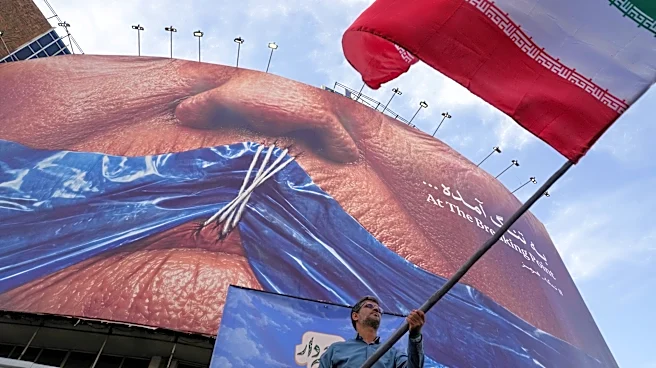
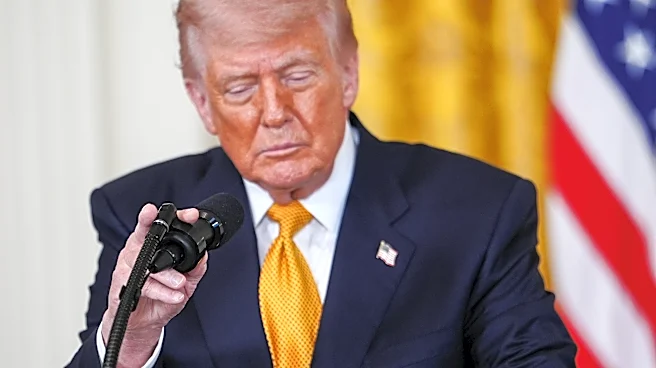
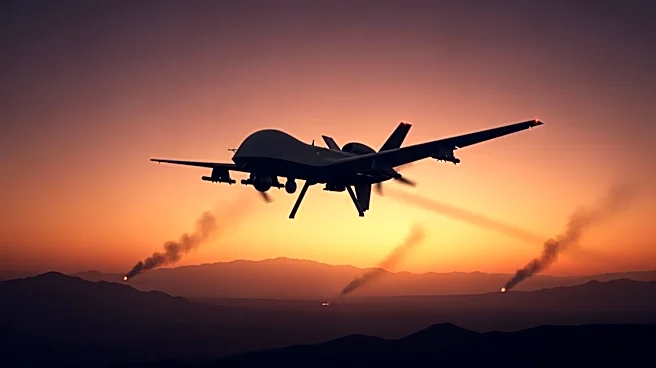
The United States has launched a series of military strikes on Iran, described by officials as 'self-defense strikes' in response to attacks on U.S. warships. Despite these actions, President Trump has stated that the ceasefire with Iran remains intact.
The strikes come amidst ongoing tensions in the region, with U.S. intelligence suggesting that Iran could withstand a blockade of the Strait of Hormuz for several months. This development is part of a broader geopolitical landscape involving U.S. military and diplomatic strategies in the Middle East.
Why It's Important?
The military strikes highlight the fragile nature of the ceasefire between the U.S. and Iran, raising concerns about potential escalation in the region. The Strait of Hormuz is a critical chokepoint for global oil supplies, and any prolonged conflict could disrupt international oil markets, affecting global economies. The situation also underscores the challenges faced by the U.S. in balancing military actions with diplomatic efforts to maintain stability in the Middle East. Stakeholders in the energy sector, as well as international diplomatic communities, are closely monitoring the situation for any signs of further escalation.
What's Next?
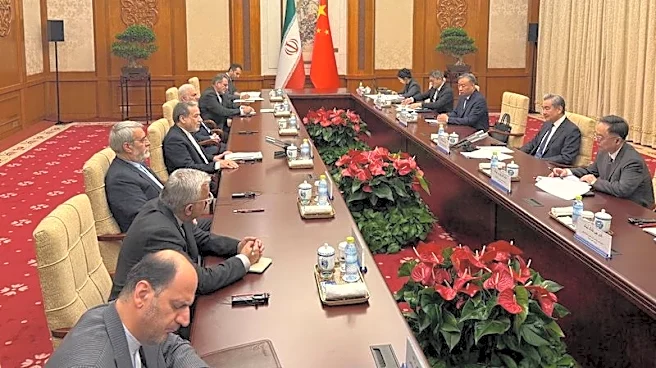
The immediate future may involve diplomatic efforts to reinforce the ceasefire and prevent further military engagements. The U.S. and its allies might engage in talks to de-escalate tensions and ensure the security of maritime routes in the region. Additionally, there could be increased military readiness and strategic positioning by both U.S. and Iranian forces. The international community, including the United Nations, may call for restraint and dialogue to avoid a broader conflict.