






What's Happening?
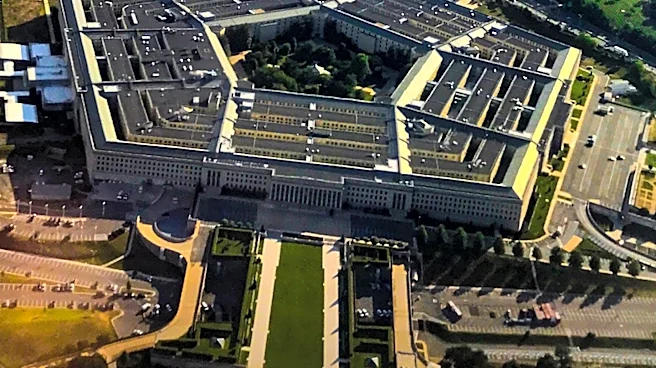
A 2-1 decision by the D.C. Circuit Court has upheld the Pentagon's national security supply-chain-risk designation against AI company Anthropic. This ruling prevents Anthropic's AI model, Claude, from being used in certain Department of Defense and contractor
systems. The designation stems from concerns regarding supply chain risks associated with the frontier AI lab itself. Anthropic is currently evaluating its options for further review. This legal development places a significant spotlight on the intersection of AI safety, national security procurement, and the practical business implications for AI developers. The dispute highlights a growing trend where the capabilities and origins of advanced AI systems are becoming critical factors in government contracting and national security assessments. The court's decision underscores the increasing scrutiny on AI companies, particularly those developing frontier models, regarding their potential vulnerabilities and their role within critical supply chains.
Why It's Important?
This court decision is important because it establishes a precedent where federal agencies can exclude AI vendors based on national security supply-chain concerns. This moves 'model safety' from a theoretical research discussion to a tangible procurement rule with significant economic consequences. For Anthropic, the immediate impact is commercial, with the company stating the designation has already cost it billions and damaged its reputation ahead of a potential IPO. More broadly, this ruling signals a new era of regulatory oversight for the AI industry, particularly for companies developing advanced AI models. It suggests that the U.S. government is increasingly concerned about the potential risks associated with AI technology and its integration into sensitive systems. This could lead to stricter regulations and vetting processes for AI companies seeking to work with government entities, potentially impacting innovation and market access for smaller or newer AI firms. The decision also raises questions about how AI companies can navigate these evolving national security frameworks while continuing to develop and deploy their technologies.
What's Next?
Anthropic is considering its options for further review following the D.C. Circuit Court's decision. This could involve seeking an en banc review by the full D.C. Circuit or appealing to the Supreme Court. Regardless of Anthropic's next legal steps, the broader AI industry can expect increased scrutiny from government agencies regarding supply chain risks and model safety. This may lead to the development of more formal guidelines and regulations for AI procurement in national security contexts. Other AI companies may proactively begin to assess and mitigate potential supply chain risks within their own operations to avoid similar designations. The ruling could also spur further debate within policy circles about the appropriate balance between fostering AI innovation and safeguarding national security, potentially influencing future legislation or executive actions related to AI governance and procurement.
Beyond the Headlines
The D.C. Circuit's decision delves into deeper implications concerning the nature of trust and liability in the age of advanced AI. The question of 'can it get a security clearance?' for an AI model highlights a fundamental shift in how technology is evaluated for critical applications. This ruling suggests that the U.S. government is grappling with how to assess and manage risks from increasingly autonomous and powerful AI systems. It raises ethical questions about accountability when AI agents operate without direct human intervention and make decisions that could have national security implications. Furthermore, the emphasis on the AI lab itself as a supply chain risk could lead to a re-evaluation of international collaborations and data sharing in AI research, potentially impacting the global landscape of AI development. The long-term shift could be towards a more nationalized or heavily regulated AI development ecosystem, particularly for frontier models, to ensure perceived national security interests are protected.