





What's Happening?
NASA's skywatching tips for July 2026 offer a guide to observing celestial events, including a predawn alignment of the Moon, Mars, and Saturn on July 11 and 12. Uranus will also be visible in the same part of the sky, though binoculars or a telescope
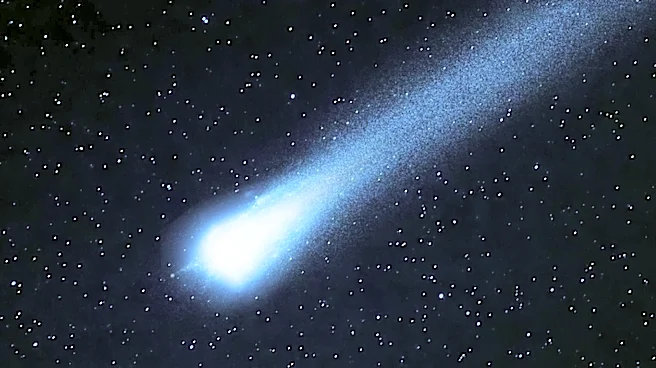
will be needed to spot it. Around July 14, Comet 10P/Tempel 2 will be visible under the dark skies of the New Moon. This short-period comet returns to the inner solar system every 5.5 years. The best viewing conditions for the comet and the Milky Way will occur during the New Moon phase. Later in the month, Saturn's rings will appear unusually thin through a telescope, providing a unique viewing opportunity.
Why It's Important?
Skywatching events like these offer educational and recreational opportunities for astronomy enthusiasts and the general public. Observing celestial phenomena can inspire interest in science and space exploration, fostering a greater appreciation for the universe. The visibility of Comet 10P/Tempel 2 and the alignment of planets provide a chance to engage with the night sky, promoting awareness of astronomical cycles and the dynamic nature of our solar system. Such events also highlight the importance of dark-sky preservation, encouraging efforts to reduce light pollution for better astronomical observations.
What's Next?
As the month progresses, skywatchers can look forward to additional celestial events, including the best viewing conditions for the Milky Way and the continued visibility of Saturn's rings. These events provide ongoing opportunities for public engagement and education in astronomy. Observatories and astronomy clubs may organize viewing events to facilitate public participation. Additionally, NASA's continued exploration and study of celestial phenomena will contribute to our understanding of the solar system and beyond.