
What's Happening?
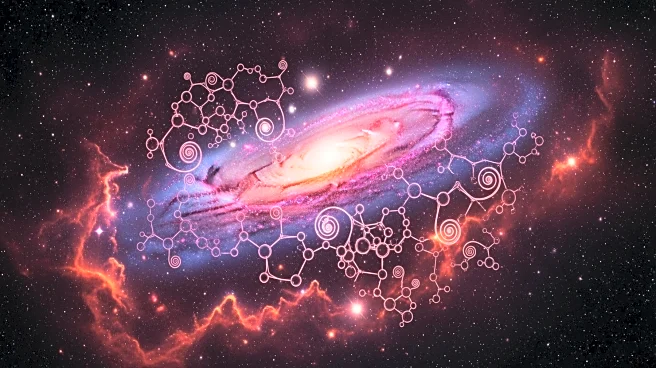
The James Webb Space Telescope (JWST) has uncovered an exceptional richness of organic molecules in the ultra-luminous infrared galaxy IRAS 07251-0248. Using spectroscopic observations, researchers detected
a variety of small organic molecules, including benzene, methane, and acetylene, as well as the methyl radical, found for the first time outside the Milky Way. These findings suggest a complex chemical network fueled by a continuous source of carbon in the galaxy's nucleus. The study highlights the potential role of these molecules as building blocks for complex organic chemistry, relevant to prebiotic processes and the formation of amino acids and nucleotides.
Why It's Important?
The discovery of abundant organic molecules in IRAS 07251-0248 provides new insights into the chemical evolution of galaxies and the potential for prebiotic chemistry in extreme environments. The presence of these molecules suggests that deeply obscured galactic nuclei could act as factories of organic compounds, playing a key role in the universe's chemical evolution. The findings also demonstrate the JWST's capabilities in exploring regions of the universe previously hidden from view, opening new avenues for studying the formation and processing of organic molecules in space. This research contributes to our understanding of the conditions that may lead to the emergence of life.