





What's Happening?
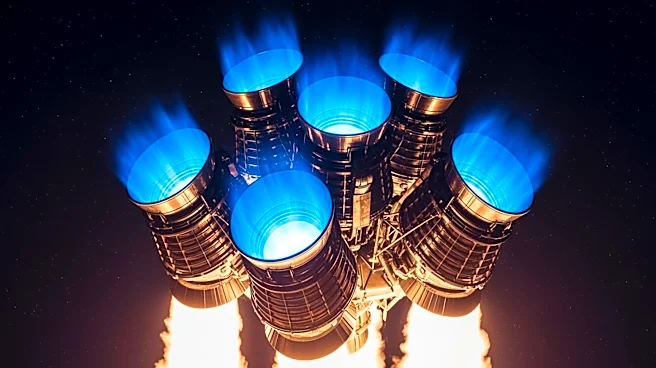
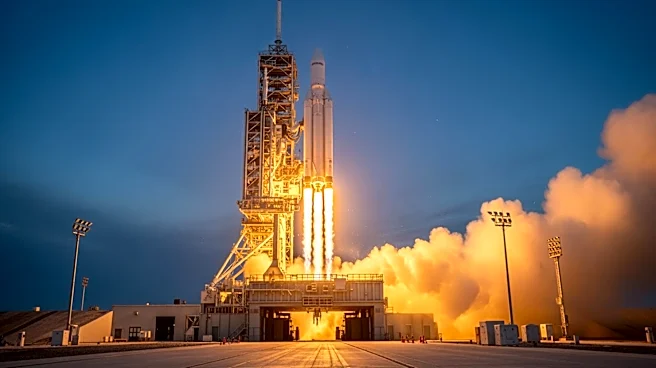
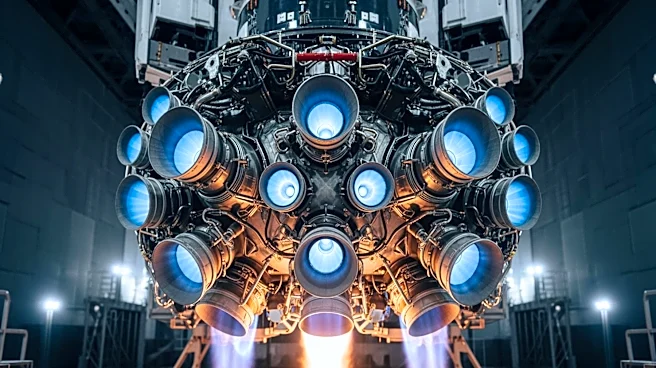
SpaceX has achieved a significant milestone with the successful static-fire test of its Super Heavy V3 booster at the Starbase facility in Texas. On May 7, the company fired all 33 Raptor engines on the booster, marking a crucial step towards an eventual
orbital flight. The test lasted 14 seconds, with the engines reaching full thrust and duration, making it the most powerful test of its kind for the Starship system. This development is part of SpaceX's broader efforts to refine the Starship system, which is essential for NASA's Artemis missions and future interplanetary travel. The booster, standing over 230 feet tall, had undergone several earlier tests, which faced issues with ground equipment. However, this successful test indicates progress in preparing the rocket for liftoff.
Why It's Important?
The successful test of the Super Heavy V3 booster is a pivotal step in SpaceX's mission to revolutionize space travel. The Starship system, with its massive payload capacity, is central to NASA's Artemis program, which aims to return astronauts to the Moon and eventually send them to Mars. The fully reusable design of the Starship is expected to drastically reduce the cost of space travel, making it more accessible and sustainable. This development not only supports NASA's deep-space goals but also positions SpaceX as a leader in the next era of space exploration. The ability to refuel Starship in orbit could enable missions far beyond Earth, with Mars being a key target.
What's Next?
SpaceX is targeting May 15 for the 12th test flight of the Starship, which will be a suborbital mission designed to further refine the vehicle's capabilities. This will be the first major test for the newly designed V3 booster. If successful, it will pave the way for future orbital launches and missions to the Moon and Mars. However, before crewed missions can occur, the vehicle will need to be equipped with a life-support system, and SpaceX must demonstrate that Starship can reach orbit and perform in-space refueling.