








What's Happening?
A new study has found that the ancient Maya civilization inadvertently poisoned its lakes and waterways with mercury due to their extensive use of red paint. The primary culprit was cinnabar, a mercury-sulfide mineral used as a vivid red pigment. Runoff
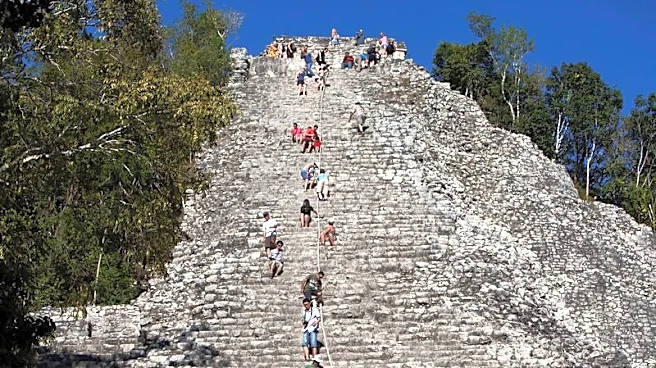
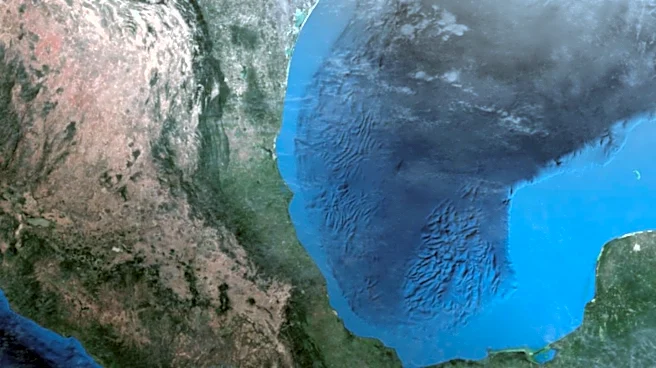
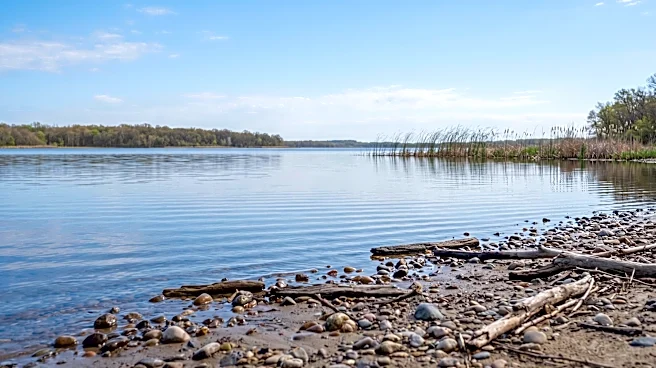
from this paint entered water systems, where anaerobic bacteria converted the cinnabar into highly toxic methylmercury, which then accumulated in the food chain. The Maya, who inhabited what is now southern Mexico and Central America, painted a vast array of objects red, including sculptures, monuments, walls, pottery, and even the deceased for ceremonial purposes. This widespread use of cinnabar, alongside red ocher, led to an environmental disaster. Matthew Waters, a paleolimnologist at Auburn University and lead author of the study, noted that the Maya's passion for the color red, symbolizing the sun, blood, and life, resulted in significant water contamination. Previous research had indicated high mercury levels in other Maya regions, but this study specifically examined Mexico's Yucatán Peninsula, revealing extensive mercury poisoning in sediment cores from sites like Cobá Lake and Cenote Xcach. The study, published in 'Science Advances,' indicates that these poisoning events coincided with various periods during the Preclassic and Classic eras of Maya civilization, from approximately A.D. 40 to 820.
Why It's Important?
This discovery is significant as it highlights a previously underappreciated environmental consequence of ancient human practices and offers new insights into the challenges faced by past civilizations. The study reveals that mercury levels in some parts of the Yucatán cores reached 2.3 parts per million, far exceeding the U.S. Environmental Protection Agency's safe drinking water limit of 2 parts per billion. Such high levels would have caused severe health issues for the Maya, including permanent lung and brain damage, and even death, from consuming contaminated water or marine life. The research also indicates a collapse in aquatic ecosystems, evidenced by the absence of freshwater shellfish fossils and algal blooms in the sediment cores, suggesting that marine life could not survive in the poisoned waters. This environmental degradation would have directly impacted the Maya's food supply, as they heavily relied on freshwater fisheries. While scholars debate the primary causes of the Maya civilization's collapse in the eighth and ninth centuries, with drought being a leading theory, the long-term environmental damage from mercury poisoning could have been a contributing factor, exacerbating resource scarcity and societal stress.
What's Next?
Future research may delve deeper into the specific health impacts on the ancient Maya population by analyzing skeletal remains for mercury exposure. Further archaeological investigations could also focus on identifying the trade routes and sources of cinnabar, as the mineral is not naturally occurring in the Yucatán and must have been imported, likely from regions such as modern-day Honduras. Understanding the extent of this trade could provide more context on the economic and social networks of the Maya. Additionally, comparative studies with other ancient civilizations that used similar pigments could reveal whether such environmental contamination was a widespread issue or unique to the Maya's specific practices and environmental conditions. The findings also prompt a re-evaluation of how ancient human activities, even those seemingly benign like artistic expression, could have profound and long-lasting ecological consequences, offering lessons for contemporary environmental management and sustainability efforts.
Beyond the Headlines
The study's findings extend beyond a mere historical account, offering profound implications for understanding the complex interplay between human culture, resource utilization, and environmental health. It underscores how deeply ingrained cultural practices, such as the Maya's reverence for the color red, can inadvertently lead to widespread ecological damage. This serves as a powerful historical parallel to modern environmental challenges, where industrial processes and consumer demands often result in unforeseen pollution and ecosystem degradation. The Maya's experience with mercury poisoning highlights the long-term, insidious nature of certain pollutants, which can persist in the environment for centuries and accumulate through the food web. Ethically, it raises questions about the responsibility of societies, both ancient and modern, to understand and mitigate the environmental impact of their actions. Legally, while not directly applicable to ancient societies, the study reinforces the scientific basis for modern environmental regulations, such as those set by the EPA, designed to protect water quality and public health from toxic substances like mercury. Culturally, it adds another layer to the rich tapestry of Maya civilization, showcasing their advanced artistic and ceremonial practices while also revealing the environmental vulnerabilities that even sophisticated societies can face.