








What's Happening?
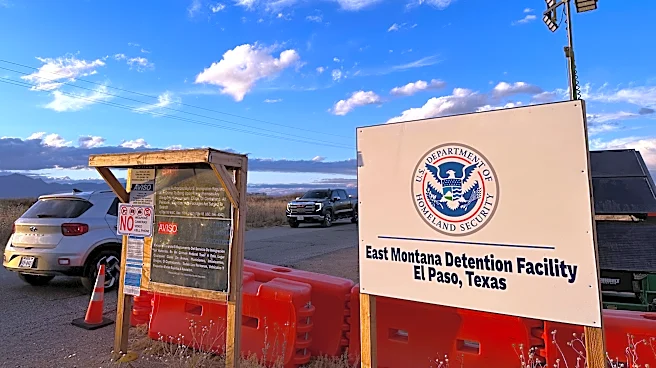
Architecture plays a critical role in defining and controlling borders, as seen in various global examples. The concept of borders extends beyond political lines to include physical structures like walls and checkpoints that regulate movement. These architectural
elements often embody hostility and exclusion, as demonstrated by the U.S.-Mexico border wall. However, architecture also has the potential to challenge these norms by creating spaces that promote dignity and connection. Initiatives like the UCSD Community Stations and symbolic interventions like the pink teeter-totters at the U.S.-Mexico border illustrate how architecture can foster dialogue and reimagine border spaces.
Why It's Important?
The discussion of architecture's influence on borders highlights the intersection of design, politics, and social justice. As borders become increasingly contested spaces, the role of architecture in shaping human experiences and interactions is more critical than ever. By rethinking how borders are designed, architects can contribute to more inclusive and humane environments. This perspective encourages a reevaluation of traditional border policies and promotes innovative solutions that prioritize human dignity and cross-cultural understanding. The potential for architecture to transform border spaces reflects broader societal shifts towards inclusivity and cooperation.