


What's Happening?
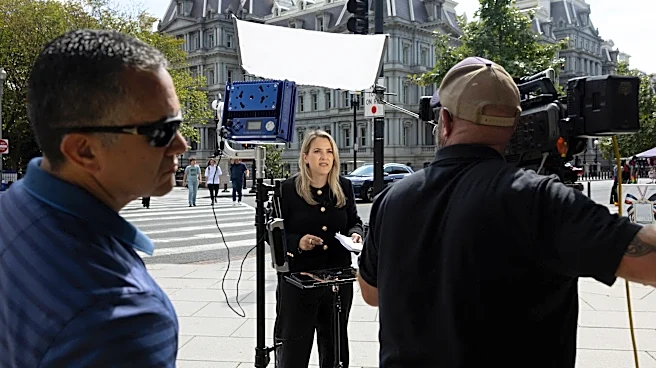
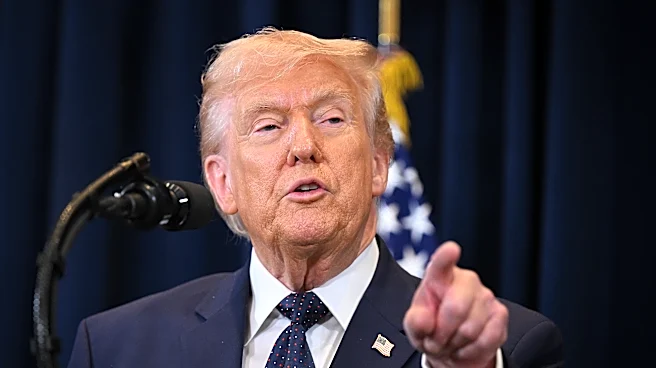
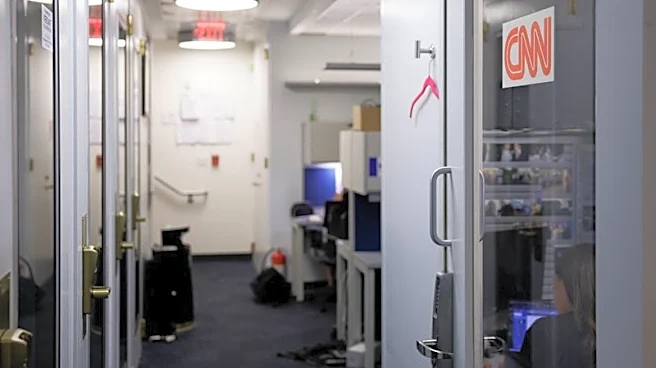
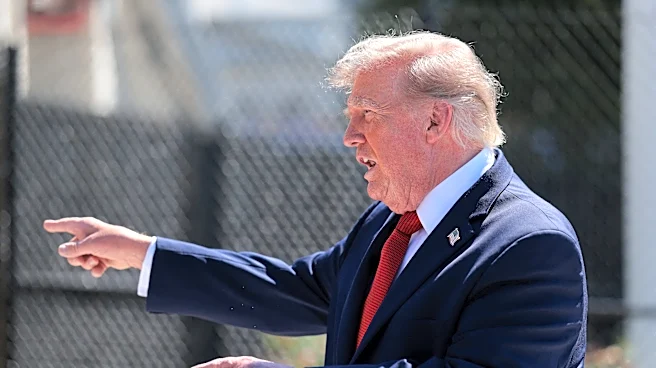
South Dakota Governor Larry Rhoden recently commented on President Trump's decision to ban CNN, MS NOW, and Politico from the White House, stating that the President 'can make his own decisions.' This remark came after Governor Rhoden witnessed President Trump's extensive
defense of the ban, where he alleged that the news organizations report 'fake news.' Governor Rhoden was in the Oval Office for an unrelated discussion concerning Trump administration efforts to reduce prescription drug costs within the federal-state Medicaid program. Earlier, President Trump had announced the ban on social media, leading to lawsuits from the affected news outlets seeking to regain access. Governor Rhoden, who has previously emphasized government transparency and improving relations with the press, reiterated his commitment to openness and responsiveness in his own administration, while also noting the irony of criticizing President Trump for being against free speech while he was actively taking questions from other media.
Why It's Important?
Governor Rhoden's comments are significant as they reflect the delicate balance many Republican officials face when addressing President Trump's controversial actions, particularly concerning press freedom. While affirming President Trump's autonomy, Rhoden simultaneously underscored his own administration's commitment to transparency and a free press, highlighting a potential divergence in approaches to media relations within the Republican party. The context of these remarks, made during discussions about healthcare and Medicaid drug pricing, also draws attention to the administration's efforts to address significant domestic policy issues amidst ongoing political controversies. The ban on news organizations and the subsequent legal challenges raise critical questions about the role of the press in a democracy and the executive branch's power to control information, impacting public trust and the democratic process.
What's Next?
The legal challenges initiated by the banned news organizations will continue to unfold, potentially setting precedents for media access to the White House. Governor Rhoden's stance on press freedom will likely be scrutinized further, especially as he faces a re-election campaign against Democratic nominee Dan Ahlers, who has criticized President Trump's approach to the media. The Trump administration's healthcare initiatives, particularly those aimed at reducing prescription drug costs in Medicaid, will continue to be implemented and evaluated for their effectiveness. The broader debate about media bias and government transparency is expected to persist, influencing public discourse and potentially shaping future media policies and political campaigns.
Beyond the Headlines
This event highlights the complex relationship between political leaders and the media, particularly in an era of heightened polarization and the proliferation of 'fake news' accusations. Governor Rhoden's nuanced response—acknowledging President Trump's decision while reaffirming his own commitment to press freedom—illustrates the internal tensions within political parties regarding media engagement. It also underscores the challenge for public officials to maintain their own principles while navigating the political landscape shaped by a powerful figure like President Trump. The incident further contributes to the ongoing national conversation about the role of journalism in a democratic society, the boundaries of executive power, and the public's right to access diverse sources of information, ultimately impacting the health of democratic institutions.